
Reactions of amino acids
[slideshare id=73662554&doc=reactionsofaminoacids-170326171644]
Reactions of amino acids Read More »
[slideshare id=73662554&doc=reactionsofaminoacids-170326171644]
Reactions of amino acids Read More »
[slideshare id=92404667&doc=factorsaffectingenzymeactivity-180330135000]
Factors affecting enzyme activity Read More »
[slideshare id=95423402&doc=immunoglobulins-180429174626]
Immunoglobulins-structure and functions Read More »
[slideshare id=95950633&doc=eicosanoids-180504135414]
Eicosanoids-Chemistry and functions Read More »
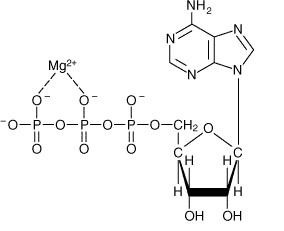
[slideshare id=57407266&doc=atp-160123152728]
ATP- The universal energy currency of cell Read More »
1- Which statement best describes Xanthine ? a) It is a direct precursor of Guanine b) It covalently binds to Allopurinol c) It is oxidized to form Uric acid d) It is oxidized to form Hypoxanthine e) It is a substrate rather than a product of the enzyme Xanthine oxidase 2- Methylated heterocyclic bases of
Chemistry of Nucleotides-Multiple-choice questions Read More »
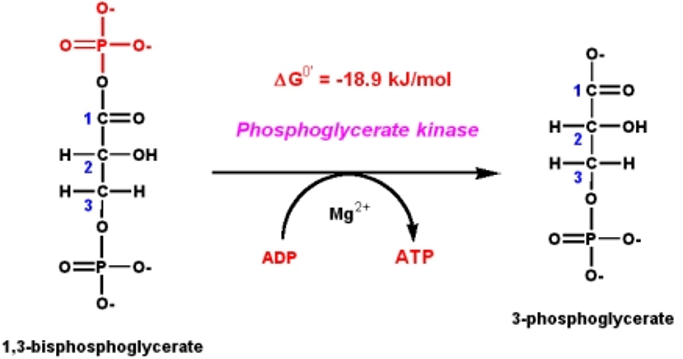
ATP- Energy Currency of cell The nucleotide coenzyme adenosine triphosphate (ATP) is the most important form of chemical energy in all cells. All fuel sources of Nature, all foodstuffs of living things, produce ATP, which in turn powers virtually every activity of the cell and organism. The cleavage of ATP is strongly exergonic. The energy
Structure, sources and functions of ATP Read More »
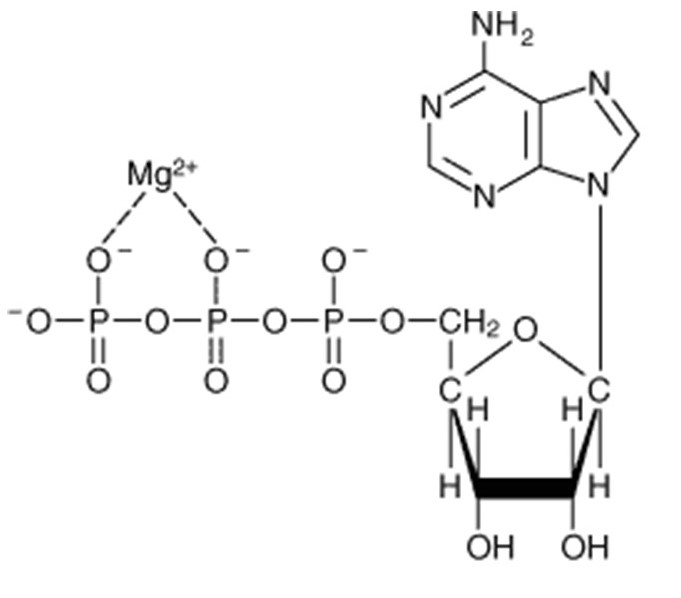
Q.- Adenosine triphosphate (ATP) is the energy currency within the cell. Which of the following best describes the type of compound ATP is? A. Phospholipid B. Amino acid C. Nucleotide D. Triacylglycerol E. Oligosaccharide. Details The correct answer is -C- Nucleotide. The nucleotide coenzyme adenosine triphosphate (ATP) is the most important form of chemical energy
ATP- The energy currency within the cell Read More »
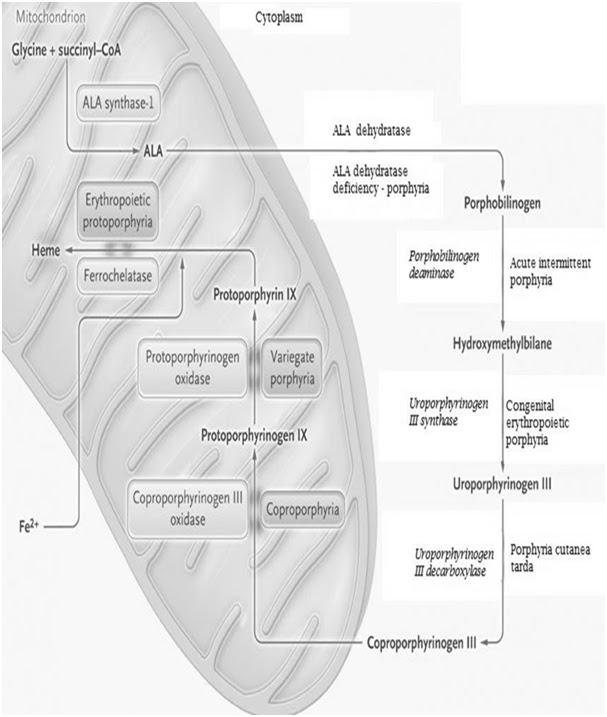
A 30-year-old woman had severe abdominal pain, nausea, vomiting and diarrhea. Evaluations including upper and lower endoscopies did not establish any intestinal infection. She gradually improved and was discharged after 2 weeks. 2 years later she was admitted to a psychiatric unit with acute mental changes and hallucinations, she had to be transferred to the
Case study- Porphyria Read More »
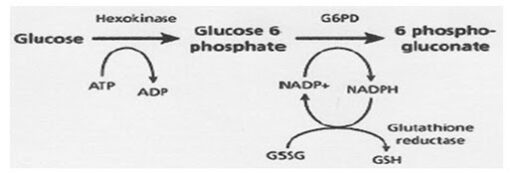
Case study-1 A 24 –year –old male suffering from Malaria was put on Primaquine. He developed malaise, fatigue and yellow discoloration of sclera and skin. On examination – There was pallor- ++, icterus ++, Pulse – 100/min., Temperature 102°F. The liver and spleen were palpable. The investigation report was as follows- Hb-5gm% TLC-13000 cmm esp. polymorphs
Case studies – Jaundice Read More »