Learning resources

Case study- Luft syndrome (Hypermetabolic mitochondrial syndrome)

Case Study A 30 -year- old patient reported to medical OPD complaining of generalized weakness, excessive perspiration, and high caloric intake without an increase in body weight. From the age of seven, she had suffered from profuse sweating that forced her to change clothes about ten times a day. To compensate for the loss of […]

Case study- Luft syndrome (Hypermetabolic mitochondrial syndrome) Read More »
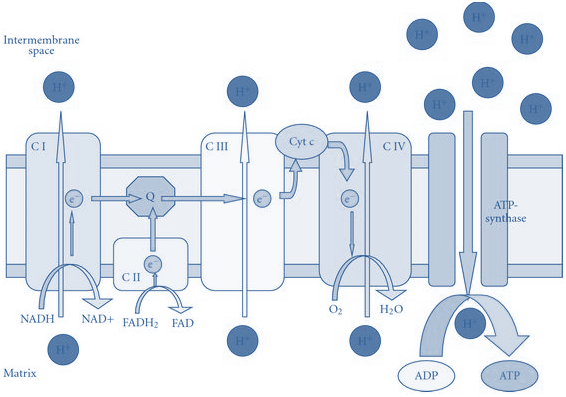
Electron Transport Chain -strictly aerobic (a brief review)

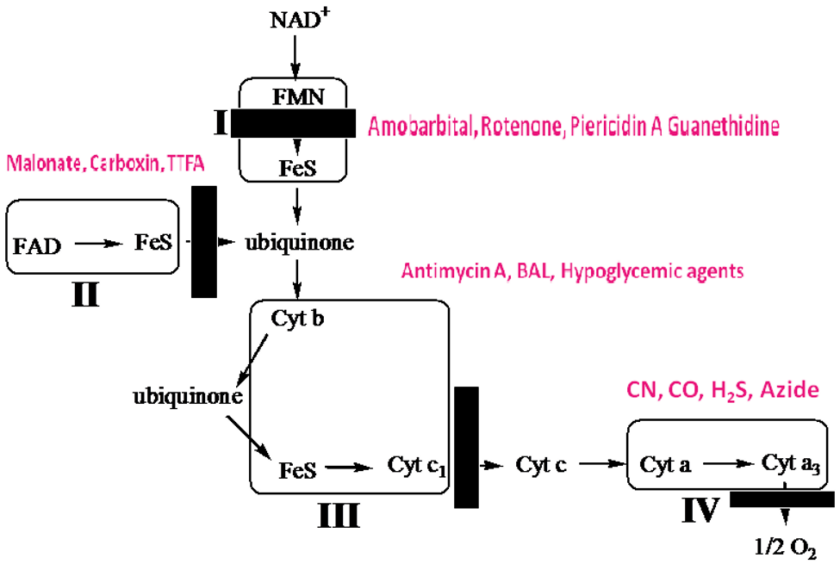
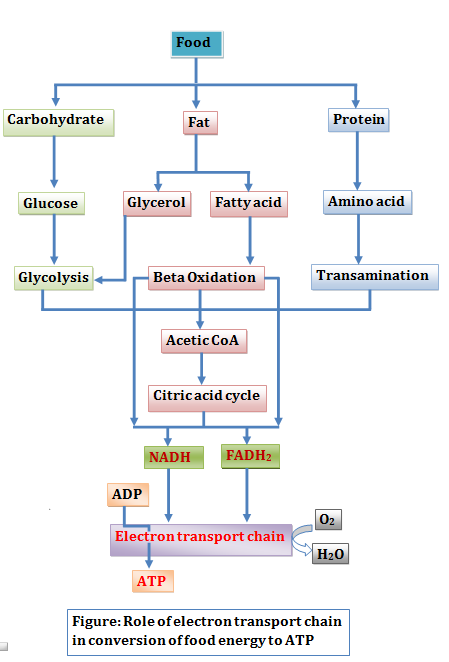
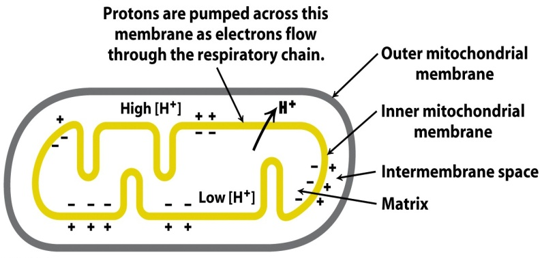
Introduction Most of the energy liberated during the oxidation of carbohydrates, fatty acids, and amino acids are made available within mitochondria as reducing equivalents (—H or electrons). The NADH and FADH2 formed in glycolysis, fatty acid oxidation, and the citric acid cycle are energy-rich molecules because each contains a pair of electrons having a high

Electron Transport Chain -strictly aerobic (a brief review) Read More »

Complete oxidation of glucose in skeletal muscle yields 36 ATPs while in other tissues the yield is 38 – what might be the reason?

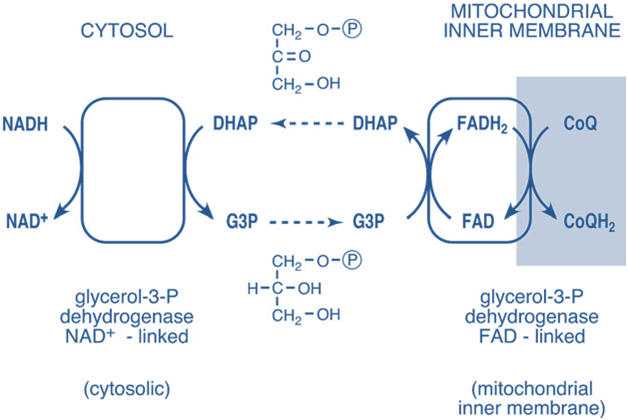
Under aerobic conditions regeneration of cytosolic NAD+ from cytosolic NADH is accomplished by transferring electrons across the mitochondrial membrane barrier to the electron transport chain where the electrons are transferred to oxygen. There are two different shuttle mechanisms whereby this transfer of electrons across the membrane to regenerate cytosolic NAD+ can be accomplished, the glycerol 3-phosphate shuttle and the malate-aspartate

Complete oxidation of glucose in skeletal muscle yields 36 ATPs while in other tissues the yield is 38 – what might be the reason? Read More »

Biological oxidation and Electron Transport Chain (Mcqs) – part-2

1. Dehydrogenases catalyze the transfer of hydrogen from one substrate to another in a coupled oxidation-reduction reaction.These dehydrogenases are specific for their substrates but often utilize common coenzymes or hydrogen carriers, e.g. NAD+. Which out of the following is not niacin ( NAD+) dependent dehydrogenase? a) Pyruvate dehydrogenase b) Glycerol-3-P dehydrogenase( Mitochondrial ) c) Glyceraldehyde-3-P

Biological oxidation and Electron Transport Chain (Mcqs) – part-2 Read More »

Biological oxidation and Electron transport chain (Multiple choice questions) – solved- part-3

Q.1- Choose a site along the electron transport chain out of the following that is not coupled to ATP synthesis: a) NADH- coenzyme Q (CoQ) reductase b) Succinate-Co Q reductase c) Cytochrome bc1 reductase d) Cytochrome oxidase e) None of the above. Q.2- Choose a statement out of the following that best describes the uncouplers

Biological oxidation and Electron transport chain (Multiple choice questions) – solved- part-3 Read More »

Electron transport chain and oxidative phosphorylation- Mcqs (set-1)

Q.1- All of the following except one are NAD+ requiring enzymes – A. Acyl co A dehydrogenase B. Glyceraldehyde-3-P dehydrogenase C. Pyruvate dehydrogenase complex D. Malate dehydrogenase E. Lactate dehydrogenase Q.2- Which one of the following enzymes catalyzes substrate-level phosphorylation in the TCA cycle A. Malate dehydrogenase B. Succinate Thiokinase C. Succinate dehydrogenase D. Alpha

Electron transport chain and oxidative phosphorylation- Mcqs (set-1) Read More »

Electron transport chain and oxidative phosphorylation- MCQs (Set-2)

Q.1- If the mitochondria were blocked at the site of NADH oxidation and were treated with succinate as substrate, what would the P: O ratio is? A. Zero B. One less than normally produced by succinate C. Same as that normally produced by succinate D. One more than normally produced by succinate E. Higher than

Electron transport chain and oxidative phosphorylation- MCQs (Set-2) Read More »

Electron Transport Chain – An Overview

An 18-year-old college student is brought to the emergency room unconscious, with a very high serum alcohol level. Alcohol metabolism can result in high NADH levels. When NADH enters the electron transport chain, which of the following is the correct order in which electron transfer occurs? a) NADH, coenzyme Q, cytochrome c, FMN, O2 b)

Electron Transport Chain – An Overview Read More »

Impaired electron flow through complex II

A -8-year-old boy is seen by an ophthalmologist for difficulties in seeing in all visual fields as well as slow eye movements. The ophthalmologist finds pigmentary retinopathy and ophthalmoplegia. The child is suspected to have Kearns- Sayre syndrome, a disorder due to a mutation in complex II of ETC. The electron transport from which substance

Impaired electron flow through complex II Read More »

×