Learning resources

Acid-base balance and imbalance, water and electrolyte balance and detoxification-Multiple choice questions

“Challenge yourself with 20 detailed multiple-choice questions on acid-base balance, electrolyte regulation, and detoxification. Learn about ABG interpretation, causes of metabolic acidosis, and key physiological mechanisms.”

Acid-base balance and imbalance, water and electrolyte balance and detoxification-Multiple choice questions Read More »

Multiple-Choice Questions- Acid-Base Balance-Test Your Knowledge!

Q.1- A person was admitted in a coma. Analysis of the arterial blood gave the following values: PCO2 16 mm Hg, HCO3– 5 mmol/l and pH 7.1. What is the underlying acid-base disorder? a) Metabolic Acidosis b) Metabolic Alkalosis c) Respiratory Acidosis d) Respiratory Alkalosis Q.2- In a man undergoing surgery, it was necessary to aspirate the contents of

Multiple-Choice Questions- Acid-Base Balance-Test Your Knowledge! Read More »

Stress-induced hypocalcemia

Case details A 15- year-old boy had numbness and tingling around his mouth and in his fingertips. The problem was intermittent usually occurring during times of great stress. Aside from his problem, he had been in good health. His physical examination was normal, as were his laboratory values, especially his total calcium concentration was 2.5

Stress-induced hypocalcemia Read More »

Case studies- Acid Base Balance and Imbalance

Case details-1   A 45 year-old-female suffering from bronchial asthma was brought to an emergency in a critical state with extreme difficulty in breathing. The blood gas analysis revealed the following pH- 7.3 PCO2- 46 mm Hg PO2- 55 mm Hg HCO3- 24meq/L What is your Interpretation? Case discussion- Low pH – acidosis Low PO2

Case studies- Acid Base Balance and Imbalance Read More »

Gray Baby Syndrome and the Role of Glucuronic acid

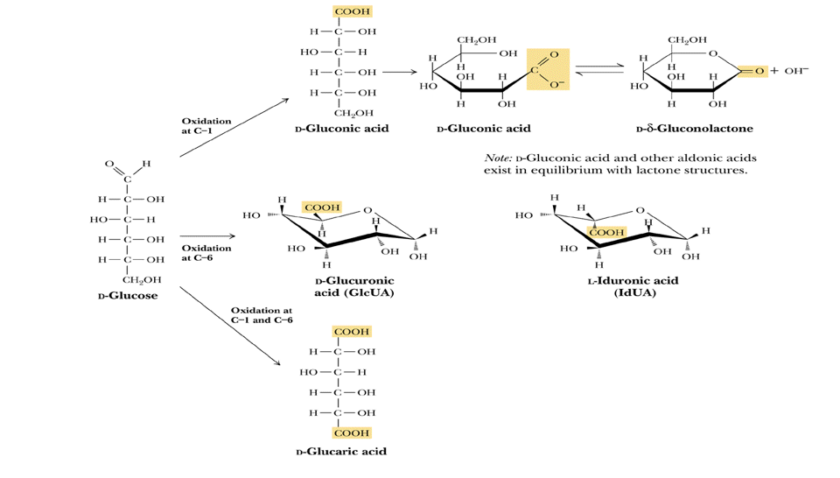
Case details Infants have decreased ability to conjugate Glucuronic acid on to drugs such as Chloramphenicol. Administration of this antibiotic during the neonatal period can result in elevated plasma levels of the drug and a fetal shock-like syndrome referred to as Gray Baby syndrome. (Image courtesy-Gray Baby Syndrome: What You Need to Know) Glucuronic acid

Gray Baby Syndrome and the Role of Glucuronic acid Read More »

Chemical Nature of Sialic acid

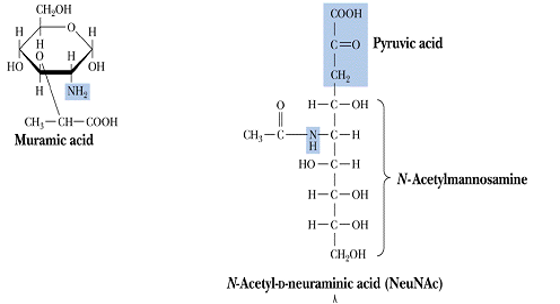
The influenza virus infects cells by binding its viral hemagglutinin to “Sialic acid” on the surface of epithelial cells. Which of the following represents the true chemical nature of sialic acid? A. Glycolipid B. Amino sugar C. Amino sugar acid D. Lipoprotein E. Glycoprotein. Details The correct answer is C- Amino sugar acid. Sialic acid

Chemical Nature of Sialic acid Read More »

Solved questions on Polysaccharides

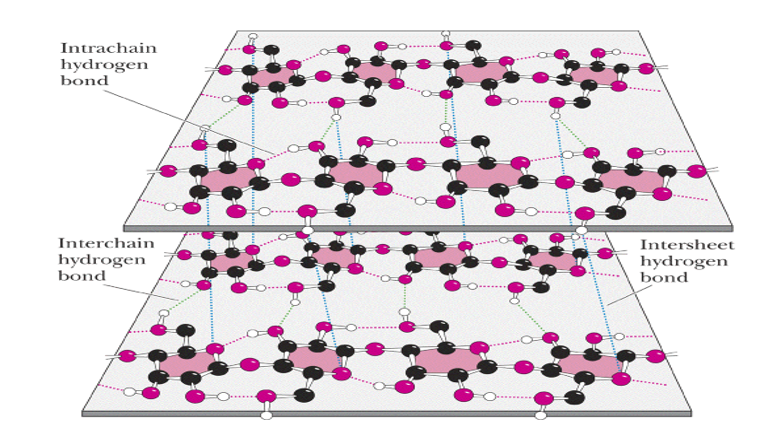
Q.1- What are storage polysaccharides? Give a brief description of each of them. Answer- Glycogen, starch, and Inulin are storage polysaccharides. 1) Glycogen- Glycogen is a readily mobilized storage form of glucose. It is a very large, branched polymer of glucose residues (Figure-1) that can be broken down to yield glucose molecules when energy is needed.

Solved questions on Polysaccharides Read More »

Disaccharides and Oligosaccharides

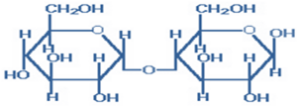
Q.1- Give a brief account of the disaccharides of biological importance. Answer- The disaccharides are sugars composed of two monosaccharide residues linked by a glycoside bond. The glycosidic bonds are readily hydrolyzed by acids but resist cleavage by alkaline hydrolysis. The glycosidic linkage is formed by loss of one molecule of water as shown in the

Disaccharides and Oligosaccharides Read More »

×