
A Quick Review of Glycogen Chemistry and Glycogenesis
A Quick Review of Glycogen Chemistry and Glycogenesis from Namrata Chhabra
A Quick Review of Glycogen Chemistry and Glycogenesis Read More »
A Quick Review of Glycogen Chemistry and Glycogenesis from Namrata Chhabra
A Quick Review of Glycogen Chemistry and Glycogenesis Read More »
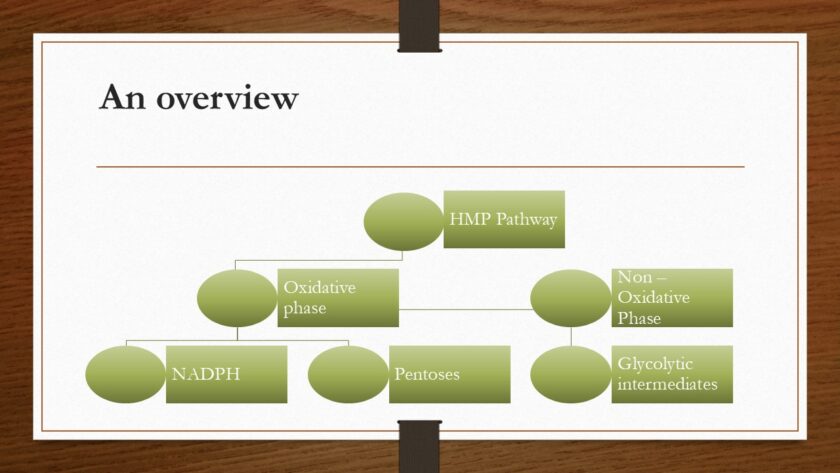
1. A researcher is investigating the effect of an enzyme whose reaction product is crucial for de novo fatty acid synthesis. Which of the following enzymes is most likely the focus of this study? A. Acyl CoA Dehydrogenase B. Glucose-6-Phosphatase C. Glucose-6-Phosphate Dehydrogenase (G-6PD) D. Lactate Dehydrogenase E. Phosphofructokinase-1 (PFK-1) Correct Answer – C.
HMP Pathway- Multiple-Choice Questions Read More »

11. During fasting and feeding states, several enzymes are regulated to maintain glucose and energy homeostasis. Specific biochemical processes occur in an individual at rest who has fasted for 12 hours to adapt to the energy demand. Which of the following occurs in such a state? A. Phosphodiesterase is activated by insulin B. Pyruvate carboxylase
Gluconeogenesis- Case-based multiple-choice questions- Set 2 Read More »
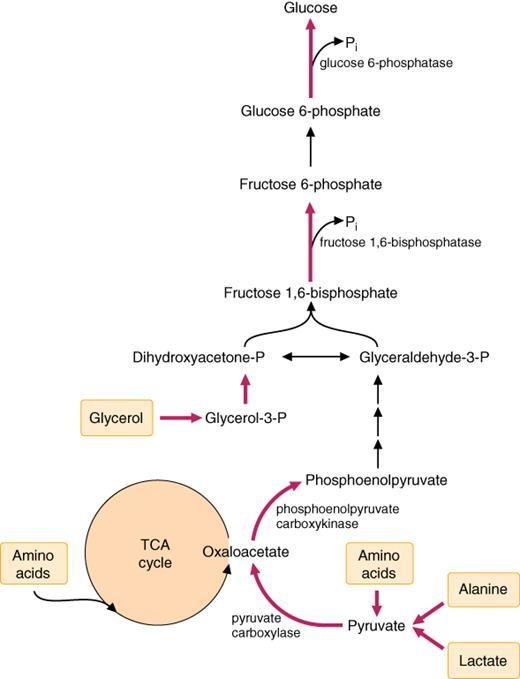
Gluconeogenesis Gluconeogenesis is a vital metabolic process that allows the body to synthesize glucose from non-carbohydrate sources, ensuring a continuous supply of glucose, especially during fasting or intense exercise. Below, we explore how key substrates enter gluconeogenesis and the role of specific enzymes with easy-to-remember mnemonics to simplify learning. Figure 1: Gluconeogenesis and
Gluconeogenesis: Pathways, Substrates, and Key Enzymes Explained with mnemonics Read More »
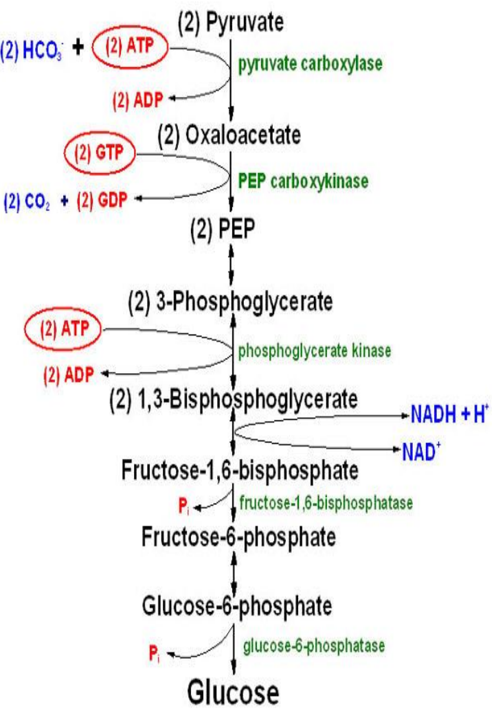
1. A 4-month-old boy is being evaluated for seizures, psychomotor retardation, and hypotonia. Work-up reveals elevated serum levels of lactate, alanine, pyruvate, and ketoacids. Based on the clinical presentation, pyruvate carboxylase activity is measured using fibroblasts from a skin biopsy and is found to be markedly decreased. This enzyme is normally used to directly synthesize
Gluconeogenesis- Case-based Multiple-Choice Questions- Set 1 Read More »
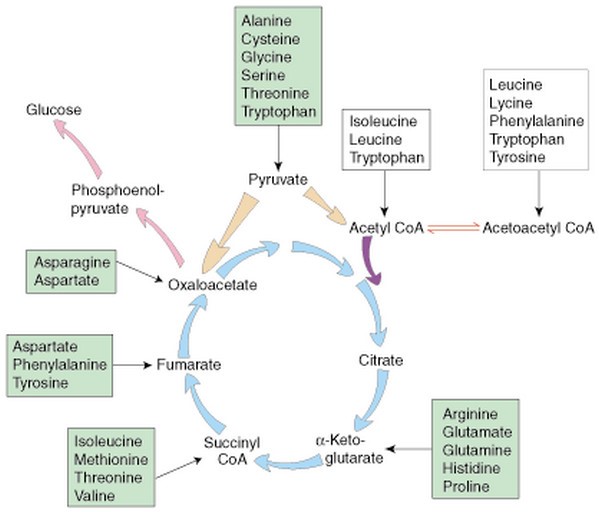
The TCA cycle (Krebs cycle) serves as a central hub for both catabolic (energy-producing) and anabolic (biosynthetic) processes, making it a dual-purpose amphibolic pathway. Below is a table that summarizes the catabolic and anabolic roles of the TCA cycle, along with mnemonics to make these concepts easier to remember. Catabolic Role of the TCA Cycle:
Amphibolic Role of the TCA Cycle with Mnemonics Read More »
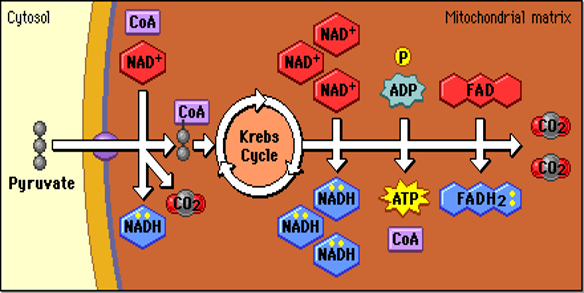
Hexokinase vs Glucokinase Regulation Feature Hexokinase Glucokinase Mnemonic Location Most tissues (muscle, brain) Liver and pancreatic β-cells “H in Human Tissues, G in Glucose Factories” Affinity for Glucose (Km) Low Km (high affinity) High Km (active only at high glucose) “Hexokinase is Hungry, Glucokinase is Greedy” Allosteric Inhibition Inhibited by Glucose-6-Phosphate No inhibition by Glucose-6-Phosphate
A Summary Of Regulation of Glycolysis, PDH Complex, and TCA Cycle (with mnemonics) Read More »
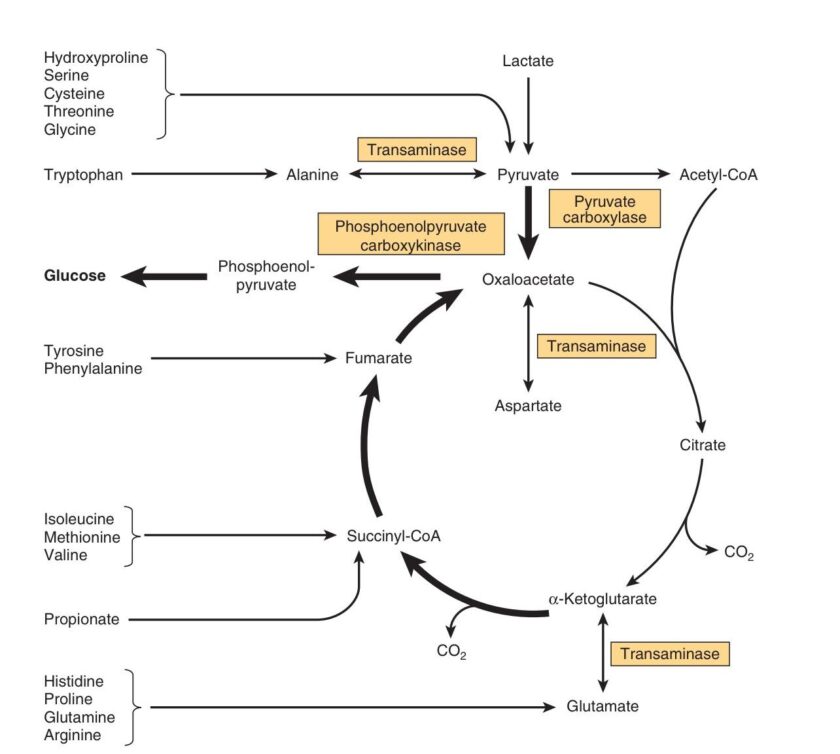
Here’s a table showing the amino acids associated with each intermediate and helpful mnemonics to aid memorization: Intermediate Amino Acids Associated Mnemonic for Amino Acid Entry Points Pyruvate Glycine, Alanine, Serine, Cysteine, Threonine, Tryptophan, Hydroxyproline G – Glycine A – Alanine S – Serine C – Cysteine T – Threonine T – Tryptophan H – Hydroxyproline
Amino acids associated with the TCA cycle and helpful mnemonics to aid memorization Read More »
1. The cytosolic isoform of which of the following TCA cycle enzymes requires NADP⁺ as a coenzyme, which can be utilized in the reduced state for reductive biosynthesis? A. Aconitase B. Citrate Synthase C. Isocitrate Dehydrogenase D. Malate Dehydrogenase E. Succinate Dehydrogenase The correct answer is C: Isocitrate Dehydrogenase: The cytosolic isoform of isocitrate dehydrogenase
PDH complex and the TCA cycle- NBME style questions set-2 Read More »