Metabolism of lipids

Fatty acid and Triglyceride synthesis- Case-based multiple-choice questions

1. Which of the following TCA cycle intermediates plays a crucial role in de novo fatty acid synthesis by providing substrate and positively regulating the rate-limiting enzyme involved in fatty acid synthesis? A. Citrate B. Isocitrate C. Malate D. Oxaloacetate E. Succinate   Correct Answer: A. Citrate. Citrate plays a crucial role in de novo […]

Fatty acid and Triglyceride synthesis- Case-based multiple-choice questions Read More »
Biochemistry-Problem-based multiple choice questions

1)- Several complexes in the electron transport chain contain non-heme iron. The iron in these complexes is bound tightly to which of the following amino acids? a) Serine b) Tyrosine c) Cysteine d) Methionine e) Glutamine 2)- A 27 –year-old female with epilepsy has been taking Phenytoin to control her seizures. She is pregnant and

Biochemistry-Problem-based multiple choice questions Read More »

Biosynthesis of cholesterol- a quick revision

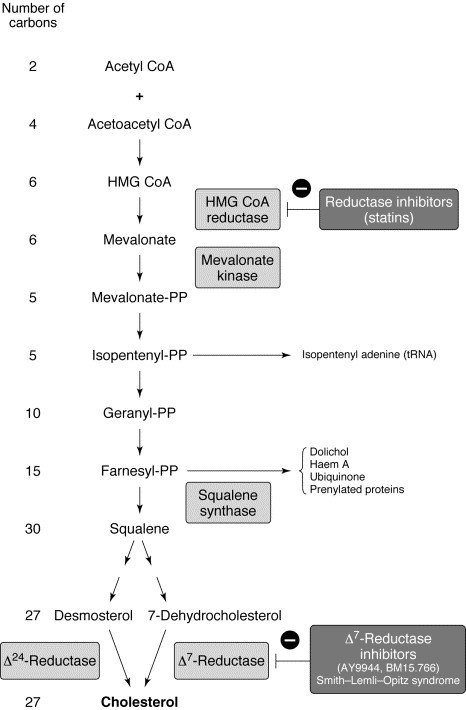
Biosynthesis of cholesterol The biosynthesis of cholesterol may be divided into five steps: (1) Synthesis of Mevalonate from acetyl-CoA. (2) Formation of Isoprenoid units from Mevalonate by loss of CO2. (3) Condensation of six isoprenoid units forms Squalene. (4) The cyclization of Squalene gives rise to the parent steroid, Lanosterol. (5)Formation of cholesterol from lanosterol.

Biosynthesis of cholesterol- a quick revision Read More »

The reaction catalyzed by HMG Co-A Reductase

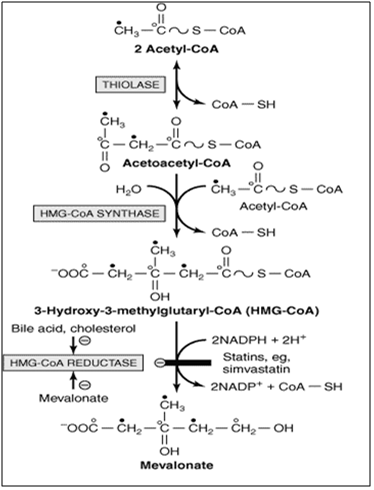
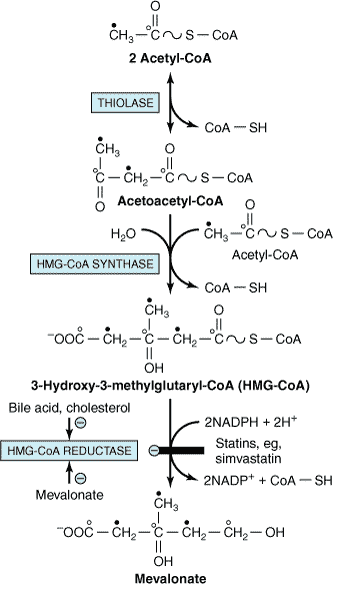
Case Details A 40-year-old man presents with chest pain that radiates to his left jaw and shoulder. He is diagnosed with a myocardial infarct (heart attack) and is prescribed statin medication. Statins are competitive inhibitors of HMG CoA reductase, which converts HMG Co A to which of the following? Isopentenyl pyrophosphate Mevalonate Geranyl pyrophosphate Farnesyl

The reaction catalyzed by HMG Co-A Reductase Read More »

Steps of de novo synthesis of cholesterol

Steps of de novo synthesis of cholesterol Cholesterol is derived from diet, de novo synthesis, and the hydrolysis of cholesteryl esters. A little more than half the cholesterol in the body arises by synthesis (about 700 mg/d), and the average diet provides the remainder. The liver and intestine account for approximately 10% each of the

Steps of de novo synthesis of cholesterol Read More »

Question of the week

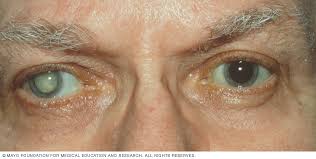
Case details A 54- year-old man with Type 1 diabetes is referred to an ophthalmologist for evaluation of developing cataracts. Blood chemistry results are shown below: Fasting blood glucose   198 mg/dl Hemoglobin A                  15 gm/dl Hemoglobin A1c             10% of total Hb Urine ketones                   Positive Urine glucose                    Positive Which of the following enzymes is most strongly

Question of the week Read More »

Utilization of ketone bodies and ketosis- lecture 3

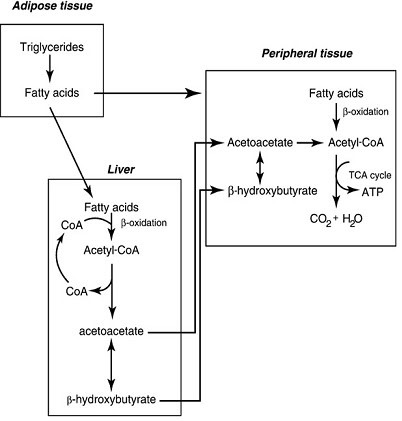
Utilization of ketone bodies The ketone bodies are water-soluble and are transported across the inner mitochondrial membrane as well as across the blood-brain barrier and cell membranes. Thus, they can be used as a fuel source by a variety of tissues, including the CNS. They are preferred substrates for aerobic muscle and heart, thus sparing

Utilization of ketone bodies and ketosis- lecture 3 Read More »

×