Metabolism of lipids

Ketogenesis-lecture 2

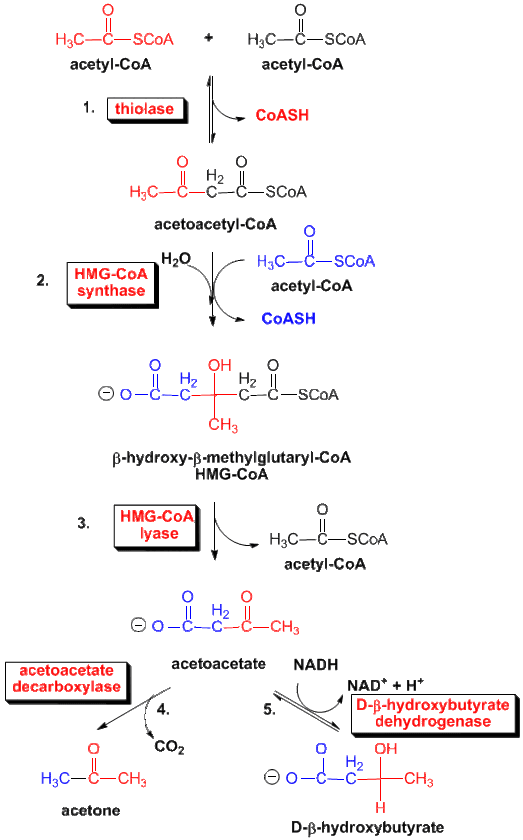
Ketogenesis Ketogenesis takes place in the liver using Acetyl CoA as a substrate or a precursor molecule. Enzymes responsible for ketone body formation are associated mainly with the mitochondria. Steps of synthesis-Acetoacetate (the first ketone body) is formed from acetyl CoA in three steps (figure ). 1)Two molecules of acetyl CoA condense to form Acetoacetyl […]

Ketogenesis-lecture 2 Read More »
Ketone bodies and their biological significance- lecture 1

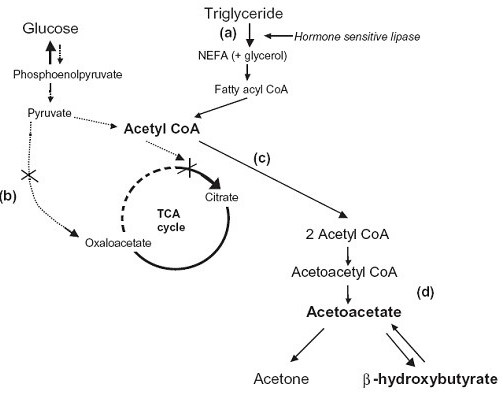
Ketone bodies Ketone bodies can be regarded as a water-soluble, transportable form of acetyl units. Fatty acids are released by adipose tissue and converted into acetyl units by the liver, which then exports them as ketone bodies. Acetoacetate, D(-3) -hydroxybutyrate (Beta-hydroxybutyrate), and acetone are often referred to as ketone bodies (figure-1). Figure-1- showing the structure

Ketone bodies and their biological significance- lecture 1 Read More »

Regulatory Mechanisms- Lipid Metabolism (summary Chart)

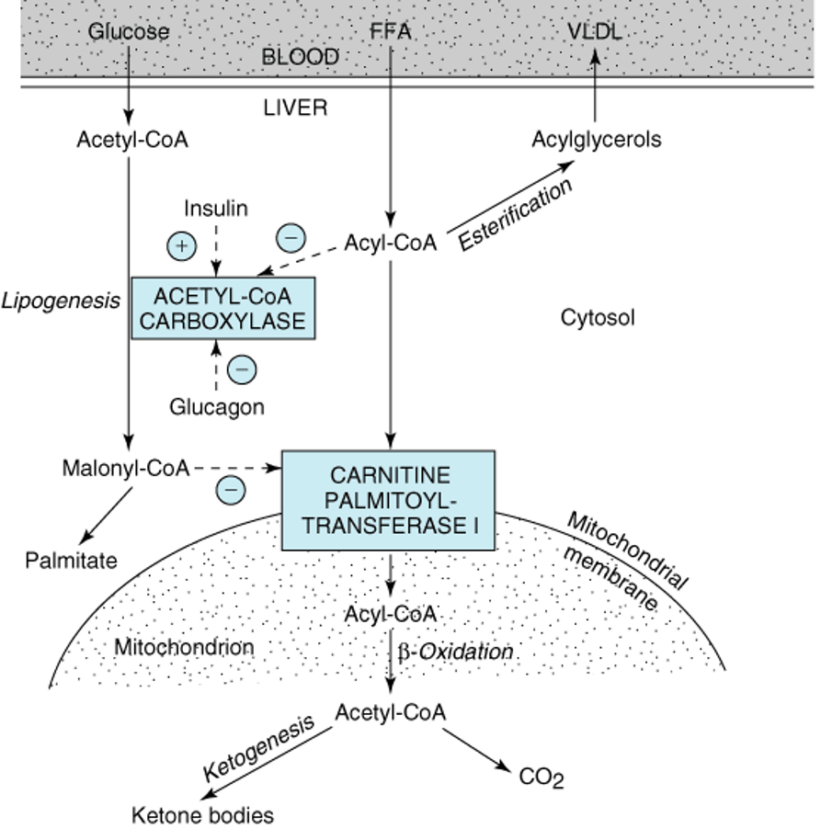
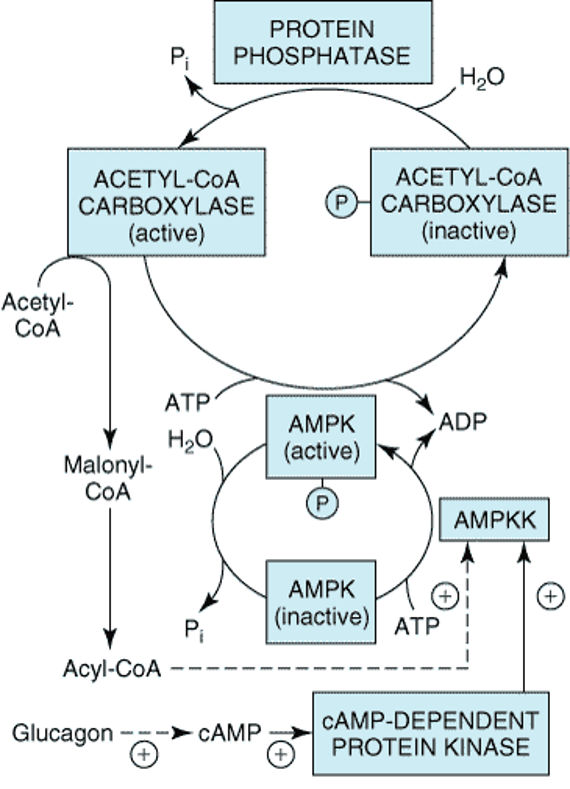
  Enzyme and pathway Effect of substrate concentration Allosteric Modification/ Feedback Inhibition/Covalent modification Induction/ Repression Clinical Significance Acetyl CoA Carboxylase (Fatty acid synthesis) Activity increases during the well-fed state Activity decreases during fasting Activator- Citrate, ATP Acetyl CoA Insulin- activates the enzyme by covalent modification of the enzyme (dephosphorylation through stimulating protein phosphatase enzyme) Inhibitors– Long-chain fatty

Regulatory Mechanisms- Lipid Metabolism (summary Chart) Read More »

Fatty Acid Synthesis: Key Steps, Enzymes, and Clinical Relevance Explained

Fatty acid synthesis takes place in three stages- Initiation, Elongation, and Termination Step-1- Initiation a) Formation of Malonyl CoA The fatty acid synthesis starts with the carboxylation of acetyl-CoA to malonyl-CoA. This irreversible reaction is the committed step in fatty acid synthesis. The synthesis of malonyl-CoA is catalyzed by acetyl-CoA carboxylase, which contains a biotin prosthetic

Fatty Acid Synthesis: Key Steps, Enzymes, and Clinical Relevance Explained Read More »

Fatty Acid Synthesis- Lecture 3 (fatty acid synthase complex)  

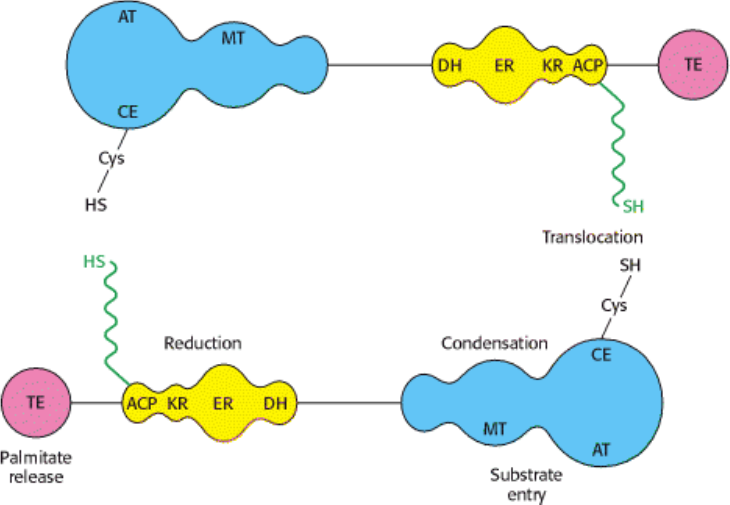
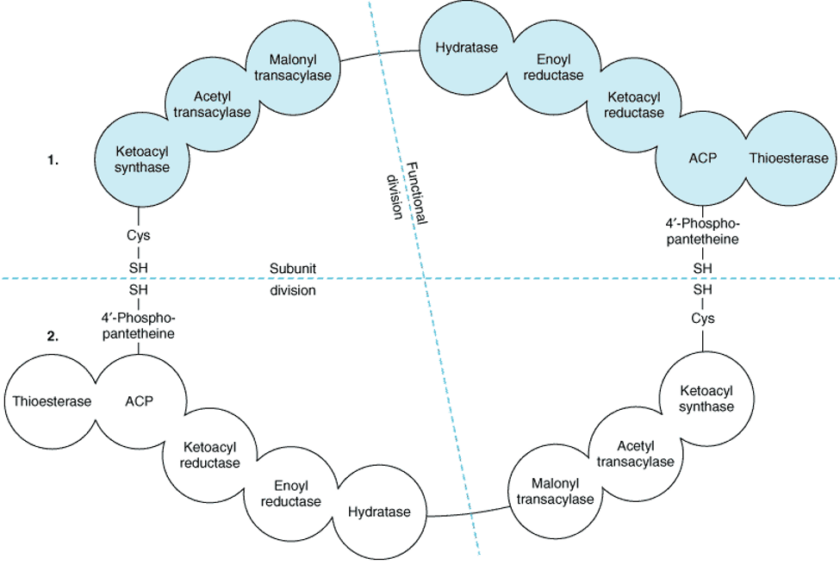
Fatty acid synthase complex is the second most important enzyme complex in the pathway of de novo fatty acid biosynthesis. In mammals, the fatty acid synthase complex is a dimer comprising two identical monomers, each containing all seven enzyme activities of fatty acid synthase on one polypeptide chain. Each chain is folded into three domains

Fatty Acid Synthesis- Lecture 3 (fatty acid synthase complex)   Read More »

Fatty Acid Synthesis- Lecture 2 (Acetyl CoA Carboxylase)

The fatty acid synthesis starts with the carboxylation of acetyl CoA to malonyl CoA. This irreversible reaction is the committed step in fatty acid synthesis (figure 1). Figure- 1- Showing the formation of Malonyl Co A from Acetyl Co A Bicarbonate as a source of CO2 is required in the initial reaction for the carboxylation

Fatty Acid Synthesis- Lecture 2 (Acetyl CoA Carboxylase) Read More »

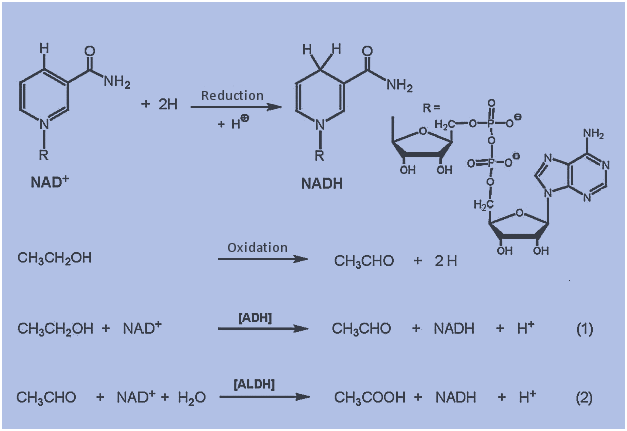
Alcohol Induced Metabolic Changes- A Case Study

Case details A 65-year-old man was admitted to the emergency department in an unconscious state. Apparently, he had become increasingly depressed after the death of his younger son two months ago. Previously, before his death, he had been a moderate drinker, but consumption of alcohol had increased markedly over the last few weeks. He had

Alcohol Induced Metabolic Changes- A Case Study Read More »

Fatty Acid Synthesis- Lecture-1 (Quick revision)

Sources of Fatty acids Diet Adipolysis de novo synthesis(from precursors)- Carbohydrates, protein, and other molecules obtained from the diet in excess of the body’s need can be converted to fatty acids, which are stored as triglycerides De novo Fatty Acid Synthesis Characteristics An extramitochondrial system synthesizes fatty acids This system is present in many tissues,

Fatty Acid Synthesis- Lecture-1 (Quick revision) Read More »

Transportation of Acetyl CoA

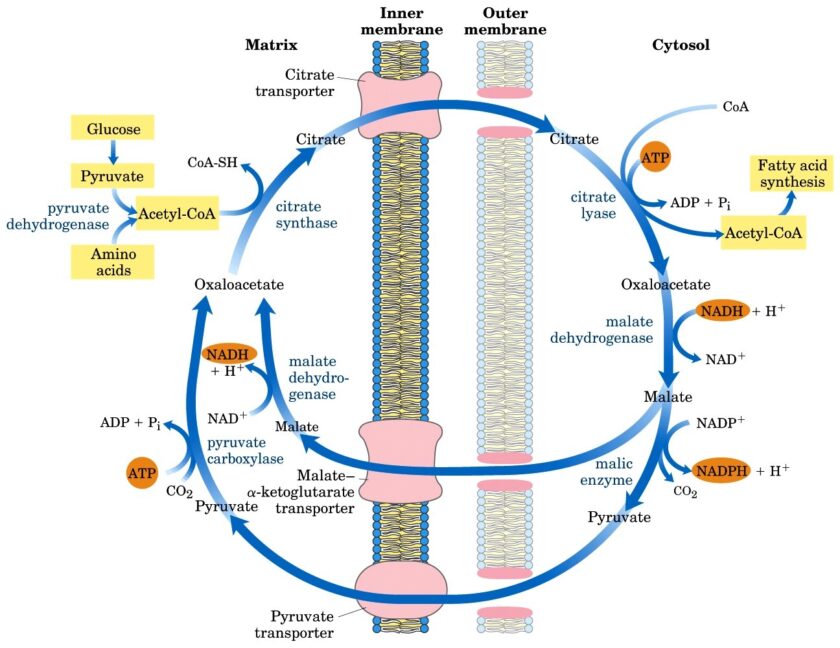
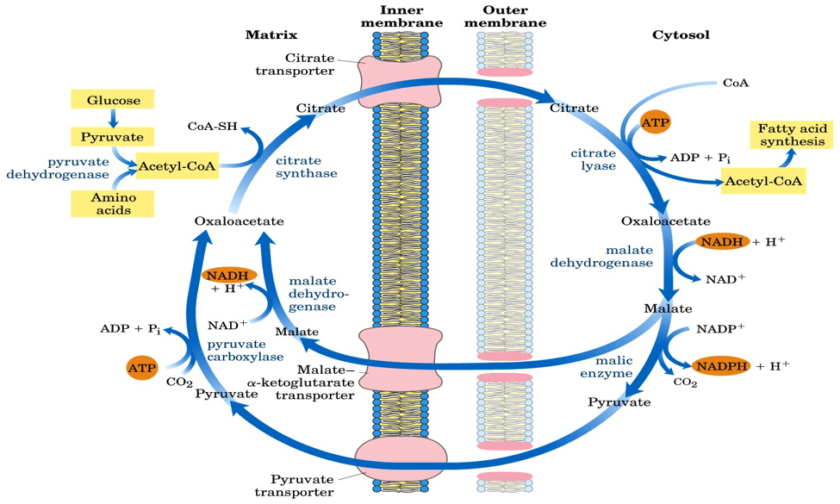
Fatty acids are synthesized in the cytosol, whereas acetyl CoA is formed from pyruvate in mitochondria. Hence, acetyl CoA must be transferred from mitochondria to the cytosol. Mitochondria, however, are not readily permeable to acetyl CoA. Carnitine carries only long-chain fatty acids. The barrier to acetyl CoA is bypassed by citrate, which carries acetyl groups

Transportation of Acetyl CoA Read More »

Fatty acid synthesis versus fatty acid oxidation

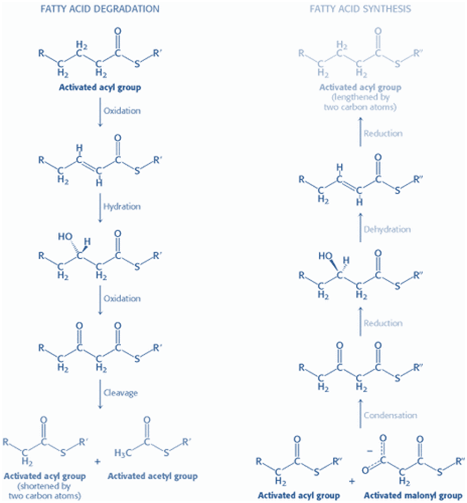
“Although chemical processes involved are the same, Fatty acid synthesis is not simply a reversal of fatty acid oxidation.”              Fatty acid synthesis seems simply a reversal of the degradative pathway, but it consists of a new set of reactions, exemplifying the principle that synthetic and degradative pathways are almost

Fatty acid synthesis versus fatty acid oxidation Read More »

×