Theory notes

Minor pathways of oxidation of fatty acids- Lecture-1 (Alpha-oxidation)

The β oxidation accounts for the bulk of energy production from fatty acids in humans. These reactions must be supplemented by other mechanisms so that all types of ingested fatty acids can be oxidized. Overview of minor pathways of the biological importance of fatty acid oxidation 1) α- Oxidation- Oxidation occurs at C-2 instead of […]

Minor pathways of oxidation of fatty acids- Lecture-1 (Alpha-oxidation) Read More »
Steps of beta-oxidation- Lecture-3

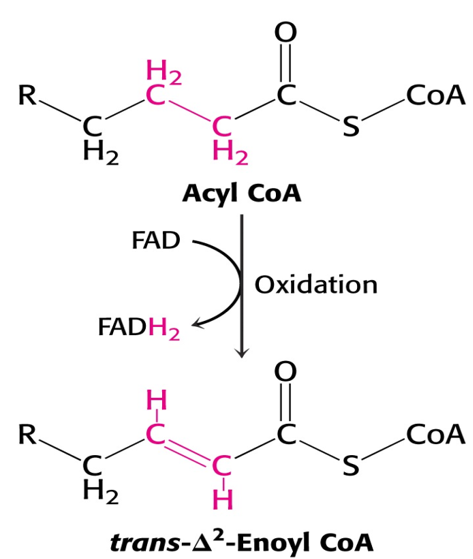
A saturated acyl Co-A is degraded by a recurring sequence of four reactions: 1) Oxidation (dehydrogenation) by flavin adenine dinucleotide (FAD) 2) Hydration, 3) Oxidation(dehydrogenation)  by NAD+, and 4) Thiolysis by CoA The fatty acyl chain is shortened by two carbon atoms as a result of these reactions, and FADH2, NADH, and acetyl CoA are

Steps of beta-oxidation- Lecture-3 Read More »

Beta oxidation of fatty acids-Lecture-2 (Activation and transportation of fatty acids)

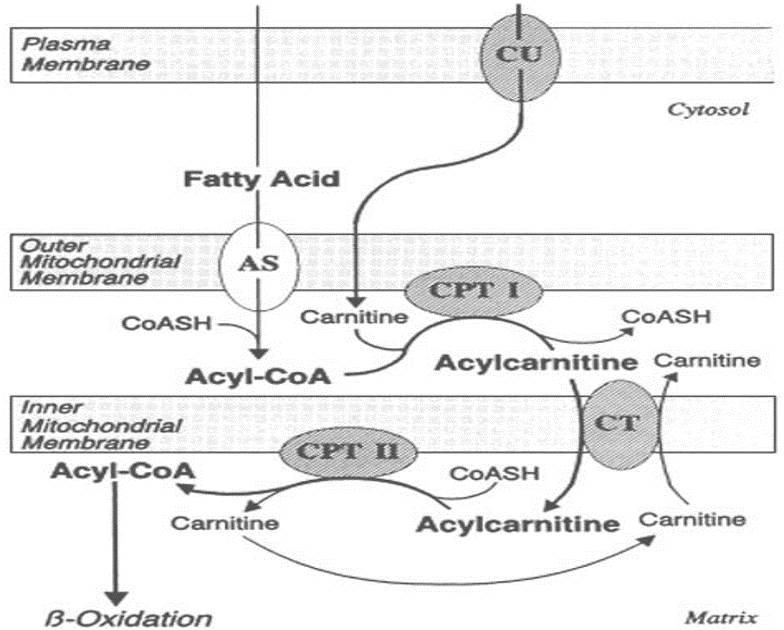
Overview β-oxidation takes place in mitochondrion. Tissues in which β-Oxidation is carried out are the liver, heart, kidney, muscle, brain, lungs, testes, and adipose tissue. In cardiac muscle, 80% of energy is derived from FA oxidation. A saturated acyl Co-A is degraded by a recurring sequence of four reactions: Oxidation by flavin adenine dinucleotide (FAD)

Beta oxidation of fatty acids-Lecture-2 (Activation and transportation of fatty acids) Read More »

Fatty acid oxidation- (General introduction)-Lecture-1   

A fatty acid contains a long hydrocarbon chain and a terminal carboxylate group. The hydrocarbon chain may be saturated (with no double bond) or maybe unsaturated (containing double bond)-figure-1. Figure 1- showing saturated and unsaturated fatty acids. Sources of fatty acids Fatty acids can be obtained from- Diet Adipolysis De novo synthesis Functions of fatty

Fatty acid oxidation- (General introduction)-Lecture-1    Read More »

Lipid absorption simplified

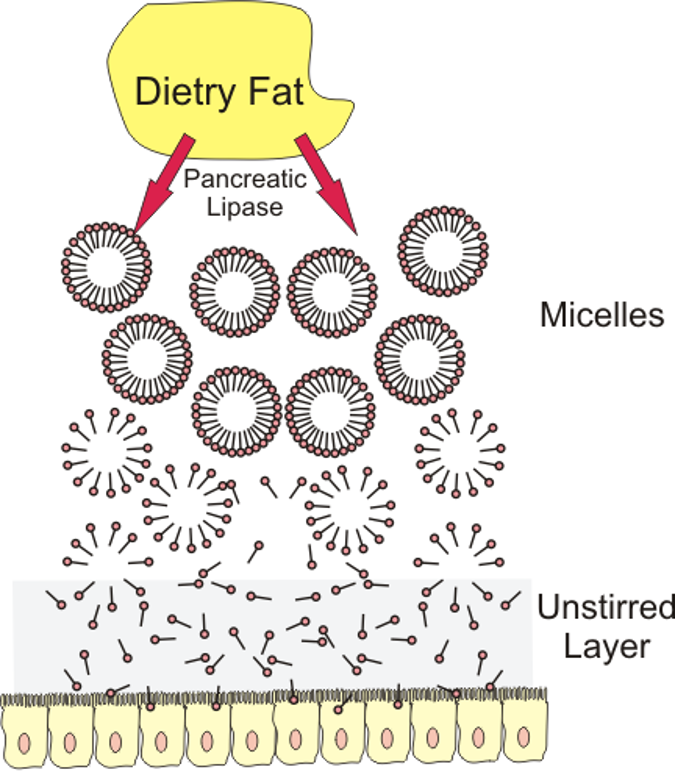
Absorption of Lipids Glycerol, short and medium-chain fatty acids (chain lengths less than 14 carbons) are directly absorbed from the intestinal lumen into the portal vein and taken to the liver for further utilization. Long-chain fatty acids, free cholesterol, and β- acyl glycerol and bile salts form mixed micelles. Micelles Micelles are disk-shaped clusters of

Lipid absorption simplified Read More »

Digestion of lipids

Introduction Lipids are a heterogeneous group of water-insoluble organic molecules that can be extracted from tissues by non-polar solvents. They are the major source of energy for the body. Dietary fat Composition More than 95% are triglycerides, the other are -Cholesteryl esters, phospholipids, and unesterified fatty acids. Dietary sources of Lipids a) Animal Sources Dairy

Digestion of lipids Read More »

×