Quick Revision Series

Comprehensive Overview of Fatty Acid Metabolism Disorders: Key Enzyme Defects, Clinical Manifestations, and Mnemonics for Easy Recall

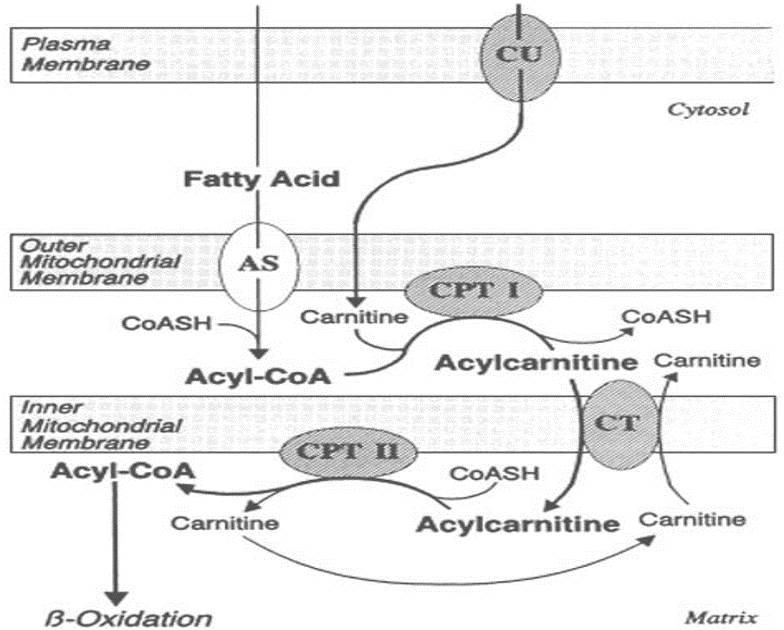
  Disoder Enzyme Defect Impairment Type Clinical Manifestations Mnemonic Carnitine Deficiency Carnitine transporter or synthesis defect Impaired transport of long-chain fatty acids Muscle weakness, cardiomyopathy, hypoketotic hypoglycemia “Car Can’t Fuel” CPT I Deficiency CPT I (Carnitine Palmitoyltransferase I) Impaired long-chain fatty acid entry into mitochondria Hypoketotic hypoglycemia, liver dysfunction, hyperammonemia “CPT I = Can’t Properly […]
Comprehensive Overview of Fatty Acid Metabolism Disorders: Key Enzyme Defects, Clinical Manifestations, and Mnemonics for Easy Recall Read More »

Understanding Organelle Roles in Fatty Acid Metabolism: Synthesis, Elongation, Desaturation, and Oxidation

Table 1: Role of organelles in Fatty Acid Synthesis, Elongation, and Desaturation Process Organelle Function Key Enzymes/Features De Novo Fatty Acid Synthesis Cytoplasm Formation of palmitate (16-carbon saturated fatty acid) from acetyl-CoA and malonyl-CoA. Acetyl-CoA carboxylase (ACC), fatty acid synthase (FAS) Elongation of Fatty Acids Endoplasmic Reticulum (ER), Mitochondria Extends the carbon chain of long-chain

Understanding Organelle Roles in Fatty Acid Metabolism: Synthesis, Elongation, Desaturation, and Oxidation Read More »

Navigating the Fed and Fasting States: Key Pathways, Enzymes, and Memorable Mnemonics

This table includes a note about the enzyme activity in each state: State Hormone Pathway Enzymes Active Mnemonic Fed State Insulin Glycolysis Hexokinase, PFK-1, Pyruvate Kinase “Hungry Pandas Party” (HPP) Glycogenesis Glycogen Synthase “Glyco Savings” Fatty Acid Synthesis Acetyl-CoA Carboxylase, Fatty Acid Synthase “ACCelerate the Fats” Protein Synthesis Ribosomal enzymes “Ribs Build” Lipogenesis Lipoprotein Lipase

Navigating the Fed and Fasting States: Key Pathways, Enzymes, and Memorable Mnemonics Read More »

“Differentiating Carnitine Deficiency and Enzyme Deficiencies in the Carnitine Shuttle: Clinical and Laboratory Insights”

Clinical Case: A 6-year-old boy presents to the emergency department with episodes of severe muscle weakness, fatigue, and dark-colored urine after prolonged physical activity. His parents report that he often becomes weak during periods of fasting or intense exercise. Blood tests reveal elevated levels of fatty acylcarnitine and normal levels of free carnitine. Plasma analysis

“Differentiating Carnitine Deficiency and Enzyme Deficiencies in the Carnitine Shuttle: Clinical and Laboratory Insights” Read More »

Glycogen Storage Diseases- Multiple-Choice Questions

1. A 3-month-old male infant presents with poor feeding, hypotonia, and cardiomegaly on physical exam. Blood tests reveal elevated lactate, uric acid, and creatine kinase levels. Echocardiogram demonstrates hypertrophic cardiomyopathy. A muscle biopsy shows excessive glycogen storage in lysosomes. Which enzyme deficiency is most likely responsible for this infant’s condition? A. Glucose-6-phosphatase B. Debranching enzyme

Glycogen Storage Diseases- Multiple-Choice Questions Read More »

Glycogen storage diseases with mnemonics to aid memorization

A table summarizing the main glycogen storage diseases (GSDs) with enzyme defects, key clinical features, and mnemonics to aid memorization: Glycogen Storage Disease Enzyme Defect Key Clinical Features Mnemonic Type I: von Gierke Disease (GSD I) Glucose-6-phosphatase Severe fasting hypoglycemia, hepatomegaly, lactic acidosis, hyperlipidemia, hyperuricemia “von Gierke: ‘G6P’s Gone, Liver Left Low” Type II: Pompe

Glycogen storage diseases with mnemonics to aid memorization Read More »

Gluconeogenesis: Pathways, Substrates, and Key Enzymes Explained with mnemonics

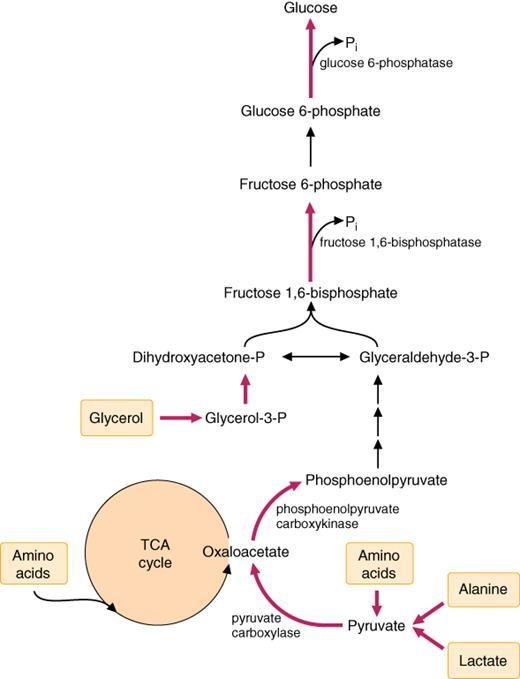
Gluconeogenesis Gluconeogenesis is a vital metabolic process that allows the body to synthesize glucose from non-carbohydrate sources, ensuring a continuous supply of glucose, especially during fasting or intense exercise. Below, we explore how key substrates enter gluconeogenesis and the role of specific enzymes with easy-to-remember mnemonics to simplify learning.     Figure 1: Gluconeogenesis and

Gluconeogenesis: Pathways, Substrates, and Key Enzymes Explained with mnemonics Read More »

Amphibolic Role of the TCA Cycle with Mnemonics

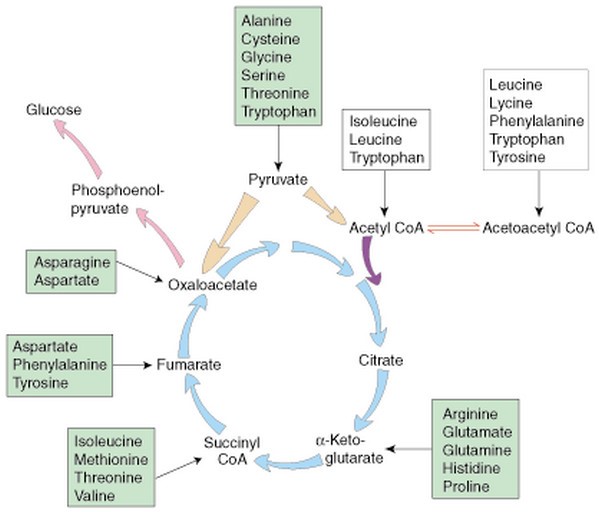
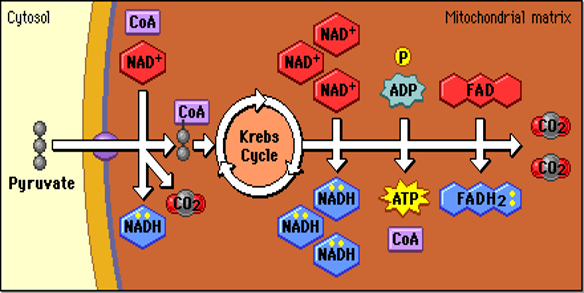
The TCA cycle (Krebs cycle) serves as a central hub for both catabolic (energy-producing) and anabolic (biosynthetic) processes, making it a dual-purpose amphibolic pathway. Below is a table that summarizes the catabolic and anabolic roles of the TCA cycle, along with mnemonics to make these concepts easier to remember. Catabolic Role of the TCA Cycle:

Amphibolic Role of the TCA Cycle with Mnemonics Read More »

A Summary Of Regulation of Glycolysis, PDH Complex, and TCA Cycle (with mnemonics)

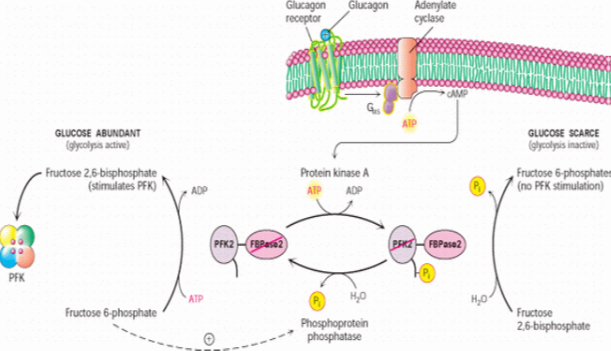
Hexokinase vs Glucokinase Regulation Feature Hexokinase Glucokinase Mnemonic Location Most tissues (muscle, brain) Liver and pancreatic β-cells “H in Human Tissues, G in Glucose Factories” Affinity for Glucose (Km) Low Km (high affinity) High Km (active only at high glucose) “Hexokinase is Hungry, Glucokinase is Greedy” Allosteric Inhibition Inhibited by Glucose-6-Phosphate No inhibition by Glucose-6-Phosphate

A Summary Of Regulation of Glycolysis, PDH Complex, and TCA Cycle (with mnemonics) Read More »

×