Amino acid metabolism

Ammonia Disposal – Short-answer questions

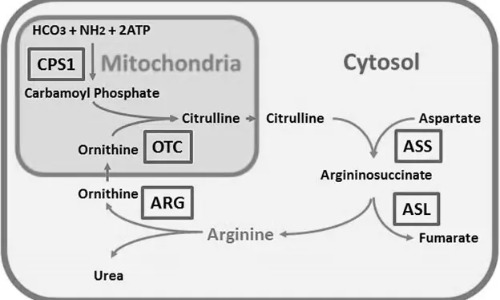
Question 1: What is the primary function of the urea cycle in humans? Answer: The urea cycle converts ammonia, a highly toxic byproduct of amino acid metabolism, into urea, a less toxic compound that can be safely excreted in urine. This process is vital for maintaining nitrogen balance in the body. Question 2: Which cellular […]

Ammonia Disposal – Short-answer questions Read More »
Amino Acid Metabolism-Multiple-Choice Questions- Set 1

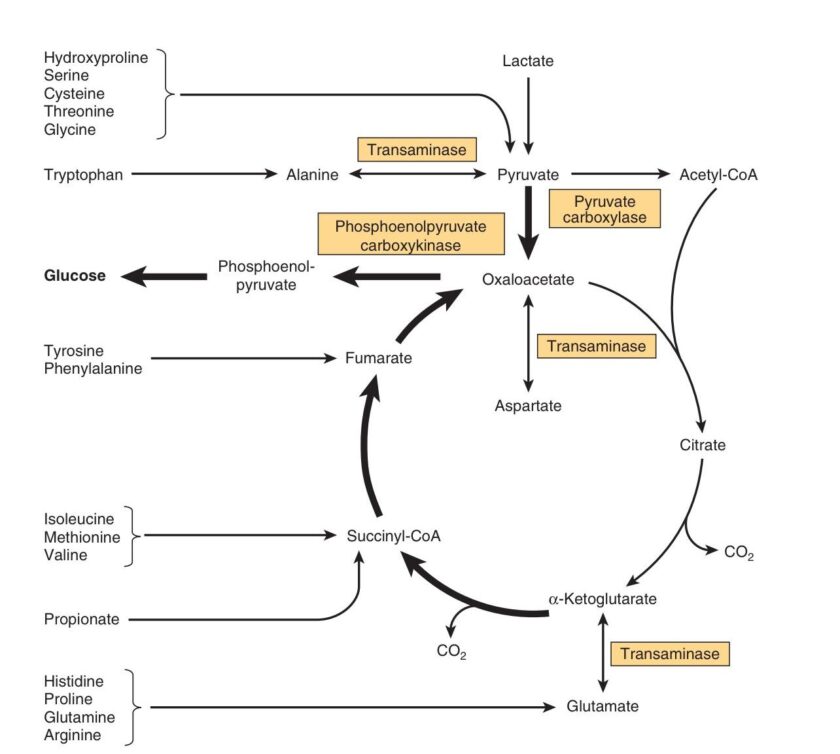
Q.1 – Which of the following is a common compound shared by the TCA (Tricarboxylic Acid) cycle and the Urea cycle? A. α-Ketoglutarate B. Succinyl-CoA C. Oxaloacetate D. Fumarate E. Citrate Correct Answer: D. Fumarate Explanation: Fumarate is a key intermediate shared between the TCA and Urea cycles. In the Urea cycle, fumarate is produced

Amino Acid Metabolism-Multiple-Choice Questions- Set 1 Read More »

Amino acids associated with the TCA cycle and their entry points (with easy mnemonics)

Here’s a table showing the amino acids associated with each intermediate and helpful mnemonics to aid memorization: Intermediate Amino Acids Associated Mnemonic for Amino Acid Entry Points Pyruvate Glycine, Alanine, Serine, Cysteine, Threonine, Tryptophan, Hydroxyproline G – Glycine A – Alanine S – Serine C – Cysteine T – Threonine T – Tryptophan H – Hydroxyproline

Amino acids associated with the TCA cycle and their entry points (with easy mnemonics) Read More »

Amino acids associated with the TCA cycle and helpful mnemonics to aid memorization

Here’s a table showing the amino acids associated with each intermediate and helpful mnemonics to aid memorization: Intermediate Amino Acids Associated Mnemonic for Amino Acid Entry Points Pyruvate Glycine, Alanine, Serine, Cysteine, Threonine, Tryptophan, Hydroxyproline G – Glycine A – Alanine S – Serine C – Cysteine T – Threonine T – Tryptophan H – Hydroxyproline

Amino acids associated with the TCA cycle and helpful mnemonics to aid memorization Read More »

Amino Acid Metabolism- Set 2- Multiple-Choice Questions

Q.1 – A 12-year-old boy develops convulsions. After an Electroencephalogram (EEG), a neurologist determines that the child has epilepsy. He is started on benzodiazepine, which promotes the activity of GABA. GABA is derived from Glutamate by which of the following reactions?A) DeaminationB) DecarboxylationC) DehydrogenationD) HydroxylationE) TransaminationAnswer: B) DecarboxylationExplanation: GABA (gamma-aminobutyric acid) is synthesized from glutamate

Amino Acid Metabolism- Set 2- Multiple-Choice Questions Read More »

Amino acid Metabolism- Multiple-Choice Questions- Set 1

Test your understanding of amino acid metabolism with this high-yield multiple-choice question set designed for medical and health science students. Covering key pathways, clinical correlations, and enzyme functions, this Amino Acid MCQ Set 1 is perfect for USMLE, board exams, and biochemistry reviews. Each question includes a detailed explanation to support deep learning and exam readiness.

Amino acid Metabolism- Multiple-Choice Questions- Set 1 Read More »

Amino Acid Metabolism-Multiple-choice questions (set-2)

Q.1- Which of the following is a common compound shared by the TCA and Urea cycles? a) α- Ketoglutarate b) Succinyl CoA c) Oxaloacetate d) Fumarate Q.2-Which of the following is a common nitrogen acceptor for all reactions involving transaminases? a) α- Ketoglutarate b) Pyruvate c) Oxaloacetate d) Acetoacetate Q.3- In a 55- year-old man

Amino Acid Metabolism-Multiple-choice questions (set-2) Read More »

Amino acid metabolism-Multiple-choice questions (set-1)

Q.1- A 12 -year-old boy develops convulsions. After running an Electroencephalogram(EEG), a neurologist determines that the child has epilepsy. He is started on benzodiazepine, which promotes the activity of GABA. GABA is derived from Glutamate by which of the following reactions? a) Transamination b) Decarboxylation c) Deamination d) Hydroxylation e) Dehydrogenation Q.2- A couple of

Amino acid metabolism-Multiple-choice questions (set-1) Read More »

×