Lecture notes

Translation- an overview

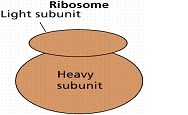
The pathway of protein synthesis is called Translation because the ‘language’ of the nucleotide sequence on the mRNA is translated into the language of the amino acid sequence. The m RNA is translated from its 5’end to its 3’end, producing a protein synthesized from its amino-terminal end to its carboxyl-terminal end. Prokaryotic Translation  Components required […]

Translation- an overview Read More »
Regulation Of Gene Expression in Eukaryotes

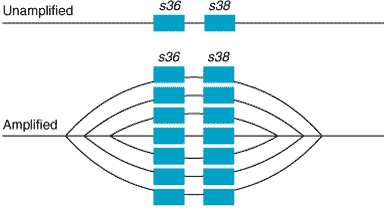
Gene regulation is significantly more complex in eukaryotes than in prokaryotes for a number of reasons- 1)  Large Genome First, the genome being regulated is significantly larger. The E. coli genome consists of a single, circular chromosome containing 4.6 Mb. This genome encodes approximately 2000 proteins. In comparison, the genome within a human cell contains 23 pairs

Regulation Of Gene Expression in Eukaryotes Read More »

Lac operon (Regulation of gene expression in prokaryotes)- lecture-2

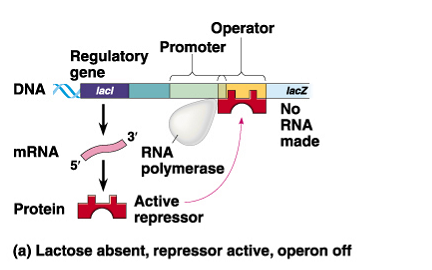
Prokaryotes must use substances and synthesize macromolecules just fast enough to meet their needs. The genes for metabolizing enzymes are expressed only in the presence of nutrients.  If the enzymes are not needed, genes are turned off. This allows for the conservation of cell resources. Controlling gene expression is one method of regulating metabolism. Bacteria

Lac operon (Regulation of gene expression in prokaryotes)- lecture-2 Read More »

Gene Expression- Lecture-1

Gene expression is the combined process of the transcription of a gene into mRNA, the processing of that mRNA, and its translation into protein (for protein-encoding genes). Significance of Gene Expression Regulated expression of genes is required for Adaptation, differentiation, and development, 1) Adaptation Organisms adapt to environmental changes by altering gene expression. a) Bacteria

Gene Expression- Lecture-1 Read More »

Genetic Code And Its Characteristics

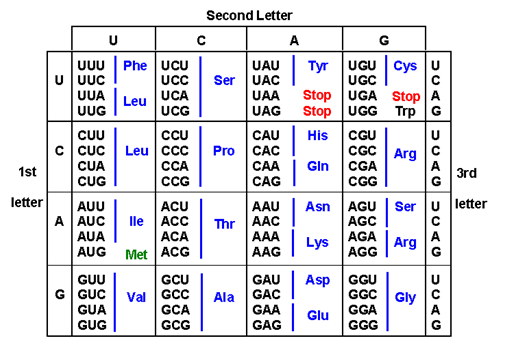
The pathway of protein synthesis is called Translation because the language of the nucleotide sequence on mRNA is translated into the language of an amino acid sequence. The process of Translation requires a Genetic code, through which the information contained in the nucleic acid sequence is expressed to produce a specific sequence of amino acids.

Genetic Code And Its Characteristics Read More »

Post transcriptional modifications

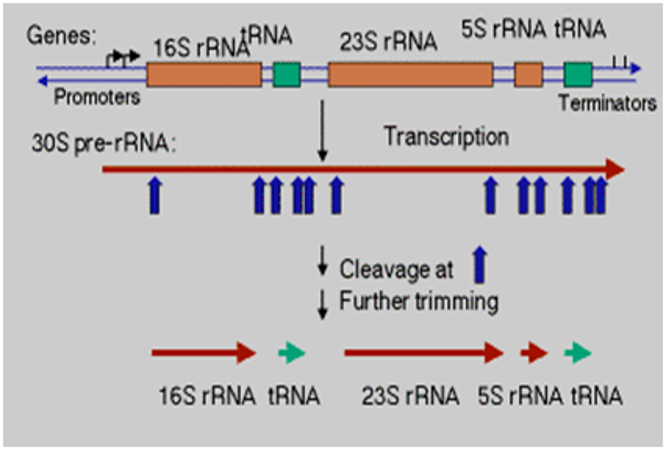
A primary transcript is a linear copy of a transcriptional unit, the DNA segment between specific initiation and termination sequences. The primary transcript of both prokaryotic and eukaryotic tRNAs and rRNAs are post-transcriptionally modified by removing extra nucleotides. Transfer RNAs are then further modified to acquire special characters unique to tRNAs. In fact, many of

Post transcriptional modifications Read More »

Transcription (part -2) Prokaryotic V/S Eukaryotic transcription

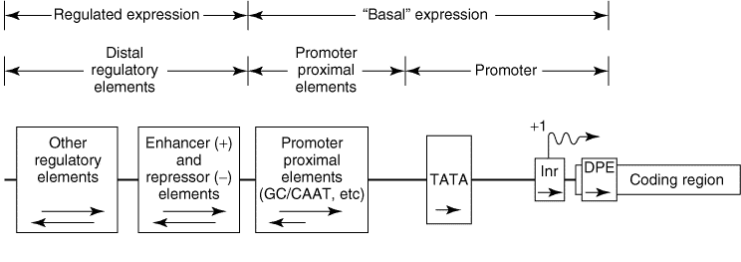
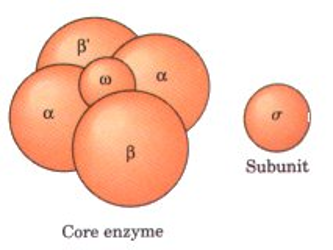
The general transcription process can be applied to both prokaryotic and eukaryotic cells. The basic biochemistry for each is the same; however, the specific mechanisms and regulation of transcription differ between prokaryotes and eukaryotes.  Transcription of eukaryotic genes is a far more complicated process than prokaryotes. The important points of differences are as follows: 1)

Transcription (part -2) Prokaryotic V/S Eukaryotic transcription Read More »

Transcription-Lecture-1

RNA Synthesis The synthesis of an RNA molecule from DNA is called Transcription. All eukaryotic cells have five major classes of RNA: ribosomal RNA (rRNA), messenger RNA (mRNA), transfer RNA (tRNA), and small nuclear RNA and microRNA (snRNA and miRNA). The first three are involved in protein synthesis, while the small RNAs are involved in mRNA

Transcription-Lecture-1 Read More »

DNA Damage And Repair

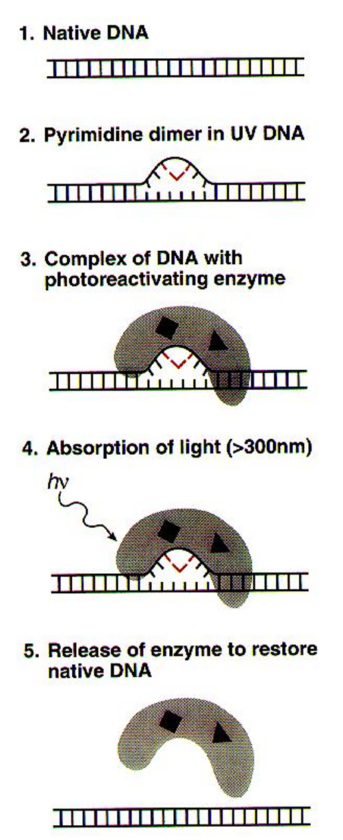
DNA in the living cell is subjected to many chemical alterations. If the genetic information encoded in the DNA is to remain uncorrupted, any chemical changes must be corrected. A failure to repair DNA produces a mutation. Agents that Damage DNA Radiations- Highly reactive oxygen radicals produced during normal cellular respiration as well as by other biochemical pathways Ionizing

DNA Damage And Repair Read More »

DNA Replication- A Quick Revision (lecture-2)

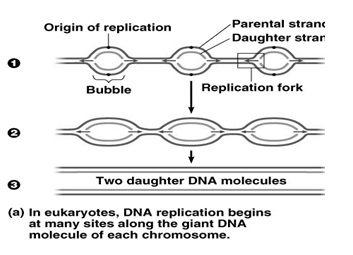
DNA Replication Basis for inheritance The fundamental process occurring in all cells for copying DNA to transfer the genetic information to daughter cells Each cell must replicate its DNA before division. Salient features of DNA replication 1) Semi-conservative Parental strands are not degraded Base pairing allows each strand to serve as a template for a

DNA Replication- A Quick Revision (lecture-2) Read More »

×