Sources of Fatty acids
- Diet
- Adipolysis
- de novo synthesis(from precursors)- Carbohydrates, protein, and other molecules obtained from the diet in excess of the body’s need can be converted to fatty acids, which are stored as triglycerides
De novo Fatty Acid Synthesis
Characteristics
- An extramitochondrial system synthesizes fatty acids
- This system is present in many tissues, including liver, kidney, brain, lung, mammary gland, and adipose tissue.
- Acetyl-CoA is the immediate substrate, and free palmitate is the end product.
- Its cofactor requirements include NADPH, ATP, Mn2+, biotin, and HCO3– (as a source of CO2).
Substances required for fatty acid biosynthesis
- Acetyl CoA
- Acetyl CoA is produced primarily from pyruvate, ketogenic amino acids, fatty acid oxidation, and alcohol metabolism
- It is a substrate of the TCA cycle and a precursor for fatty acids, ketone bodies, and sterols.
- NADPH
NADPH is involved as a donor of reducing equivalents
- The oxidative reactions of the pentose phosphate pathway are the chief source of the hydrogen required for the reductive synthesis of fatty acids.
- Tissues specializing in active lipogenesis—i.e., liver, adipose tissue, and the lactating mammary gland—possess an active pentose phosphate pathway (Figure 1).

Figure 1- Reactions 1 and 2 are catalyzed by glucose 6-P dehydrogenase and 6-phosphogluconate dehydrogenase, respectively.
- Other sources of NADPH include the reaction that converts malate to pyruvate catalyzed by the “Malic enzyme” (NADP malate dehydrogenase) – figure-2 and the extramitochondrial isocitrate dehydrogenase reaction (probably not a substantial source, except in ruminants) figure-3.
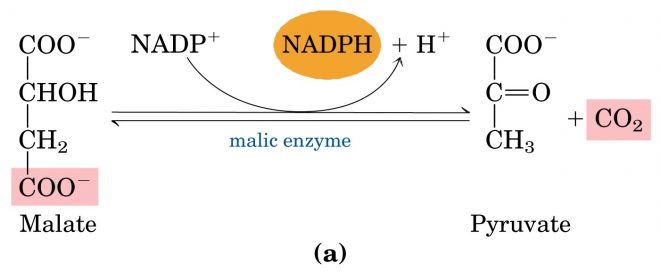
Figure 2- It is a reversible reaction; pyruvate produced in the reaction reenters the mitochondrion for further utilization
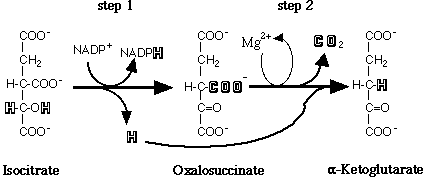
Figure-3-There are three isoenzymes of Isocitrate dehydrogenase. One, which uses NAD+, is found only in mitochondria. The other two use NADP+ and are found in mitochondria and the cytosol. Respiratory chain-linked oxidation of Isocitrate proceeds almost completely through the NAD+-dependent enzyme.
- Enzymes and cofactors involved in the process of Fatty acid synthesis
Two main enzymes-
- Acetyl CoA carboxylase
- Fatty acid Synthase
Both the enzymes are multienzyme complexes
Coenzymes and cofactors are-
- Biotin
- NADPH
- Mn++
- Mg++
Transportation of Acetyl CoA (Figure-4)
- Fatty acid synthesis requires considerable amounts of acetyl-CoA
- Nearly all acetyl-CoA used in fatty acid synthesis is formed in mitochondria
- Acetyl CoA has to move out from the mitochondria to the cytosol
- Acetate is shuttled out of mitochondria as citrate
- The mitochondrial inner membrane is impermeable to acetyl-CoA
- Intra-mitochondrial acetyl-CoA first reacts with oxaloacetate to form citrate in the TCA cycle catalyzed by citrate synthase
- Citrate then passes into the cytosol through the mitochondrial inner membrane on the citrate transporter.
- In the cytosol, citrate is cleaved by citrate lyase regenerating acetyl-CoA.
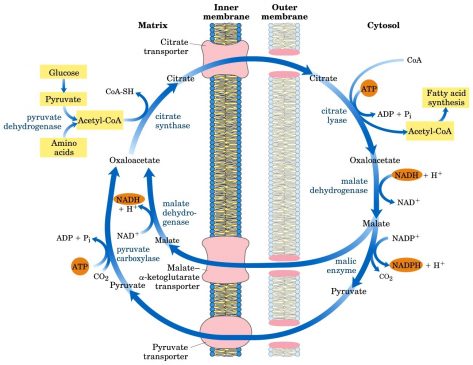
Figure-4- Transportation of acetyl CoA out of the mitochondria through citrate transporter
The fate of Oxaloacetate (Figure-4)
The other product of Citrate cleavage, oxaloacetate, can be:
- Channeled toward glucose production
- Converted to malate by malate dehydrogenase
- Converted to pyruvate by malic enzyme, producing more NADPH, which can be used for the fatty acid synthesis
- Pyruvate and Malate pass through special transporters present in the inner mitochondrial membrane.
To be continued……