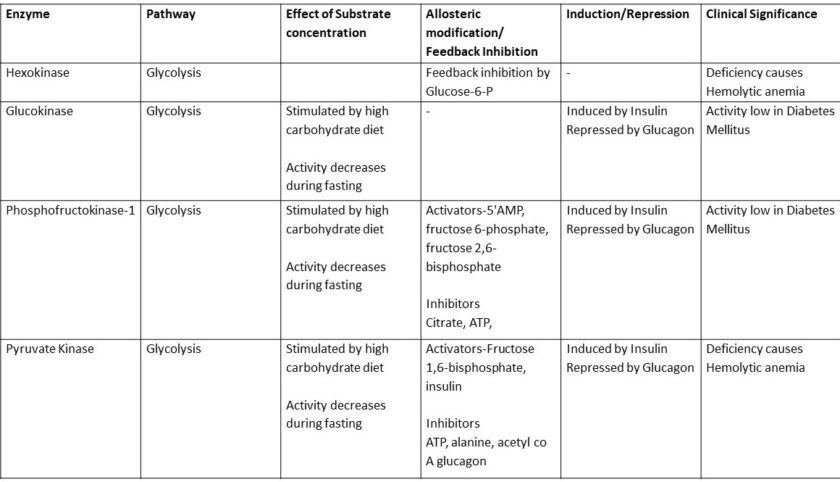
| Enzyme | Pathway | Effect of substrate concentration | Allosteric Modification/Feedback Inhibition | Induction/ Repression | Clinical Significance |
| Acetyl CoA Carboxylase | Fatty acid synthesis | Activity increases during well-fed state
Activity decreases during fasting |
Activator-
Citrate, ATP Acetyl CoA Insulin-by causing de-phosphorylation by stimulating protein phosphatase Inhibitors- Long-chain fatty acids, Epinephrine, Glucagon- via changes in phosphorylation state through c AMP mediated phosphorylation cascade |
Induced by Insulin
Repressed by Glucagon |
Activity decreases in diabetes Mellitus |
| Carnitine Acyl Transferase | Carnitine shuttle | Activity is low in the fed state and high during fasting | Activated by Glucagon through lipolysis and provision of fatty acids for oxidation
Inhibited by insulin and malonyl CoA |
Inherited CAT-I deficiency affects only the liver, resulting in reduced fatty acid oxidation and ketogenesis, with hypoglycemia. | |
| HMG CoA Reductase | Cholesterol synthesis | Activity is low in the fasting state, | Activated by Insulin, Thyroid hormone
Inhibited by –Glucagon, Glucocorticoids (by reversible phosphorylation) Dietary cholesterol (Hepatic synthesis) Mevalonate and cholesterol,the products of the pathway
|
Expression of HMG CoA reductase is regulated by sterol regulatory element binding protein
Also induced by Insulin |
Activity high in Diabetes mellitus due to availability of excess Acetyl CoA.
Activity is inhibited by statins used as cholesterol-lowering drugs. |