Handbook of Biochemistry Spotting

https://www.amazon.com/Handbook-Biochemistry-Spotting-Namrata-Chhabra/dp/9352501438 This book is founded on the concept of problem-based learning. The aim of this book is to get the students of Health and Medical Sciences aware of the basic biochemical principles and to practice these principles in analyzing commonly occurring health-associated problems in terms of their biochemical components. The text, although clinically relevant, is […]

Handbook of Biochemistry Spotting Read More »
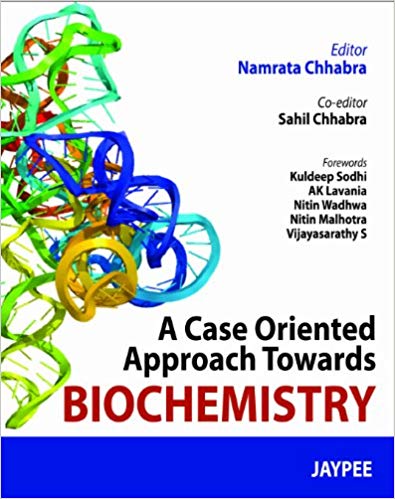
A Case Oriented Approach Towards Biochemistry

https://www.amazon.com/Case-Oriented-Approach-Towards-Biochemistry/dp/9350901889/ref=sr_1_1?keywords=Case+Oriented+Approach+Towards+Biochemistry&qid=1582308149&sr=8-1 This book summarizes the essentials of Biochemistry with Clinical Correlations. The purpose of this book is to present a clear discussion of Biochemistry in relation to physiological processes occurring at the cellular levels and to cite examples of deviant biochemical processes in different clinical conditions. This book contains evaluations of clinical cases in sections,

A Case Oriented Approach Towards Biochemistry Read More »

Important Questions of Monosaccharides (Solved)(Set-1)

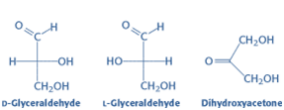
Q.1- Discuss in brief about the isomerism in monosaccharides.Answer- The sugar molecules having asymmetric carbon atoms exhibit isomerism. Asymmetric carbon atom- It is the carbon atom that is attached to four different groups. All monosaccharides except- Dihydroxyacetone, have asymmetric carbon atoms. Based on the presence of asymmetric carbon atoms the following types of isomerism of monosaccharides are

Important Questions of Monosaccharides (Solved)(Set-1) Read More »

Glycosaminoglycans and proteoglycans – A quick revision

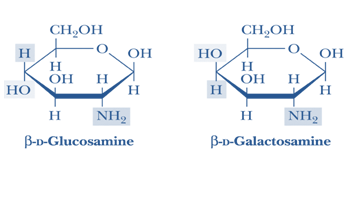
Introduction The most abundant heteropolysaccharides in the body. Highly negatively charged molecules, with extended conformation that imparts high viscosity to the solution. GAGs are located primarily on the surface of cells or in the extracellular matrix (ECM). Along with the high viscosity of GAGs comes low compressibility, which makes these molecules ideal for a lubricating

Glycosaminoglycans and proteoglycans – A quick revision Read More »

Multiple-choice questions- Chemistry of carbohydrates- Revision- Set-2

Q.1- Which of the following is not a disaccharide? a) Hyaluronic acid                                             b) Maltose c) Lactose                                            d) Sucrose                                                           Q.2- What is the molecular formula of Glucose? a) CH3OH                                             b) C12H22O11 c) C6H1206                                                             d)  C6H12O5                                            Q.3-Sucrose is composed of which two sugars? a) Glucose and Glucose                                 b) Glucose

Multiple-choice questions- Chemistry of carbohydrates- Revision- Set-2 Read More »

×