Lecture notes

Beta oxidation of odd chain and unsaturated fatty acids- lecture-4

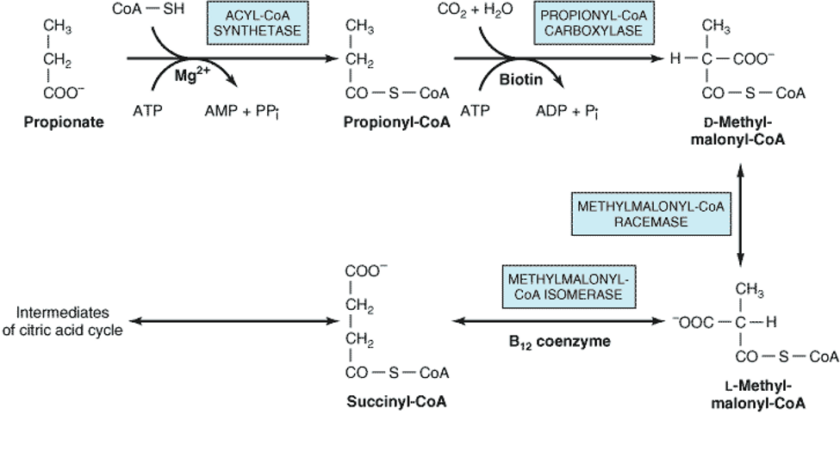
Fatty acids with an odd number of carbon atoms are oxidized by the pathway of β-oxidation, producing acetyl-CoA until a three-carbon (propionyl-CoA) residue remains. The 3- Carbon Propinyl CoA is utilized in the following way: The fate of propionyl CoA This compound is converted to succinyl-CoA, a constituent of the citric acid cycle (Figure 1). […]

Beta oxidation of odd chain and unsaturated fatty acids- lecture-4 Read More »
Beta oxidation of fatty acids-Lecture-2 (Activation and transportation of fatty acids)

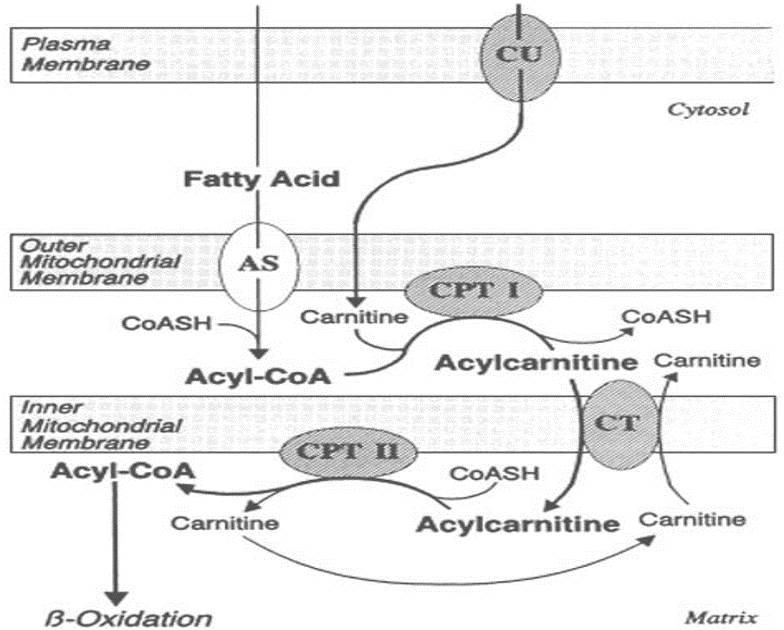
Overview β-oxidation takes place in mitochondrion. Tissues in which β-Oxidation is carried out are the liver, heart, kidney, muscle, brain, lungs, testes, and adipose tissue. In cardiac muscle, 80% of energy is derived from FA oxidation. A saturated acyl Co-A is degraded by a recurring sequence of four reactions: Oxidation by flavin adenine dinucleotide (FAD)

Beta oxidation of fatty acids-Lecture-2 (Activation and transportation of fatty acids) Read More »

Fatty acid oxidation- (General introduction)-Lecture-1   

A fatty acid contains a long hydrocarbon chain and a terminal carboxylate group. The hydrocarbon chain may be saturated (with no double bond) or maybe unsaturated (containing double bond)-figure-1. Figure 1- showing saturated and unsaturated fatty acids. Sources of fatty acids Fatty acids can be obtained from- Diet Adipolysis De novo synthesis Functions of fatty

Fatty acid oxidation- (General introduction)-Lecture-1    Read More »

Lipid absorption simplified

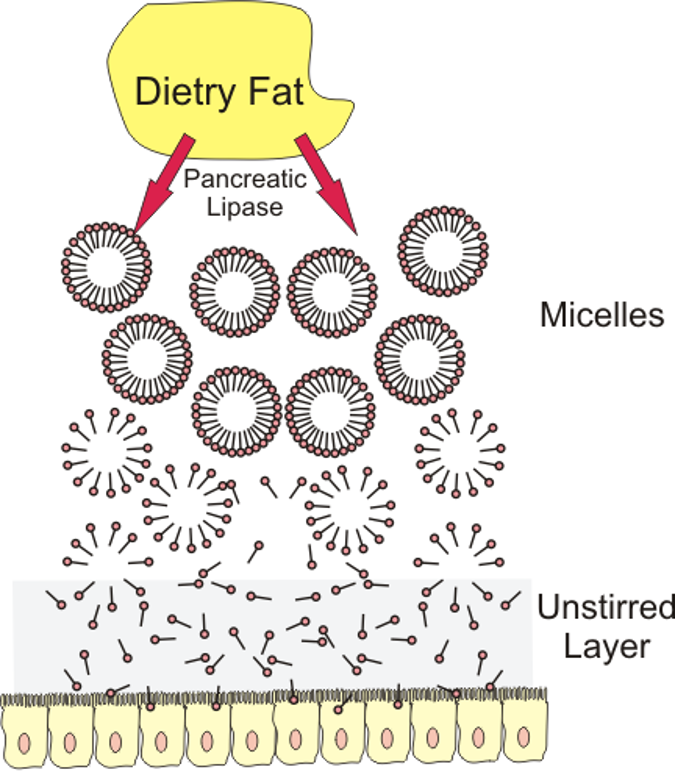
Absorption of Lipids Glycerol, short and medium-chain fatty acids (chain lengths less than 14 carbons) are directly absorbed from the intestinal lumen into the portal vein and taken to the liver for further utilization. Long-chain fatty acids, free cholesterol, and β- acyl glycerol and bile salts form mixed micelles. Micelles Micelles are disk-shaped clusters of

Lipid absorption simplified Read More »

Digestion of lipids

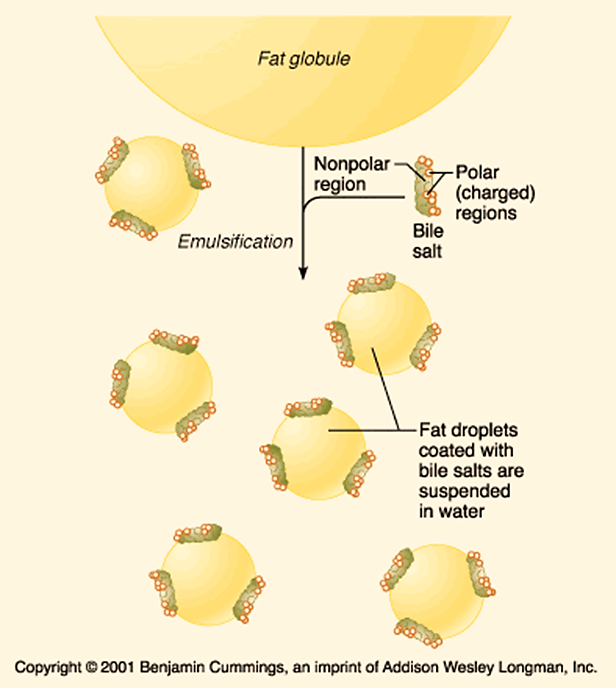
Introduction Lipids are a heterogeneous group of water-insoluble organic molecules that can be extracted from tissues by non-polar solvents. They are the major source of energy for the body. Dietary fat Composition More than 95% are triglycerides, the other are -Cholesteryl esters, phospholipids, and unesterified fatty acids. Dietary sources of Lipids a) Animal Sources Dairy

Digestion of lipids Read More »

Translation- an overview

The pathway of protein synthesis is called Translation because the ‘language’ of the nucleotide sequence on the mRNA is translated into the language of the amino acid sequence. The m RNA is translated from its 5’end to its 3’end, producing a protein synthesized from its amino-terminal end to its carboxyl-terminal end. Prokaryotic Translation  Components required

Translation- an overview Read More »

Regulation Of Gene Expression in Eukaryotes

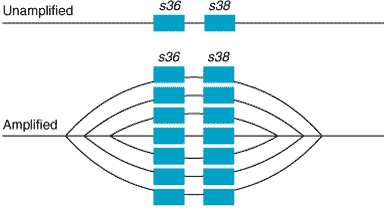
Gene regulation is significantly more complex in eukaryotes than in prokaryotes for a number of reasons- 1)  Large Genome First, the genome being regulated is significantly larger. The E. coli genome consists of a single, circular chromosome containing 4.6 Mb. This genome encodes approximately 2000 proteins. In comparison, the genome within a human cell contains 23 pairs

Regulation Of Gene Expression in Eukaryotes Read More »

Lac operon (Regulation of gene expression in prokaryotes)- lecture-2

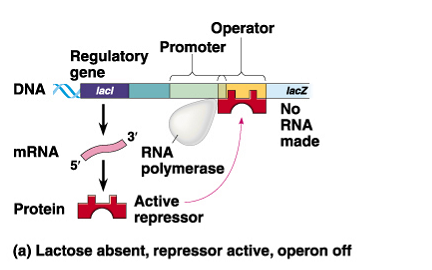
Prokaryotes must use substances and synthesize macromolecules just fast enough to meet their needs. The genes for metabolizing enzymes are expressed only in the presence of nutrients.  If the enzymes are not needed, genes are turned off. This allows for the conservation of cell resources. Controlling gene expression is one method of regulating metabolism. Bacteria

Lac operon (Regulation of gene expression in prokaryotes)- lecture-2 Read More »

Gene Expression- Lecture-1

Gene expression is the combined process of the transcription of a gene into mRNA, the processing of that mRNA, and its translation into protein (for protein-encoding genes). Significance of Gene Expression Regulated expression of genes is required for Adaptation, differentiation, and development, 1) Adaptation Organisms adapt to environmental changes by altering gene expression. a) Bacteria

Gene Expression- Lecture-1 Read More »

Genetic Code And Its Characteristics

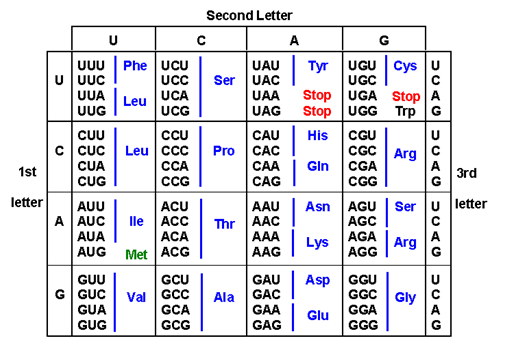
The pathway of protein synthesis is called Translation because the language of the nucleotide sequence on mRNA is translated into the language of an amino acid sequence. The process of Translation requires a Genetic code, through which the information contained in the nucleic acid sequence is expressed to produce a specific sequence of amino acids.

Genetic Code And Its Characteristics Read More »

×