
A Quick Review of Glycogen Chemistry and Glycogenesis
A Quick Review of Glycogen Chemistry and Glycogenesis from Namrata Chhabra
A Quick Review of Glycogen Chemistry and Glycogenesis Read More »
A Quick Review of Glycogen Chemistry and Glycogenesis from Namrata Chhabra
A Quick Review of Glycogen Chemistry and Glycogenesis Read More »
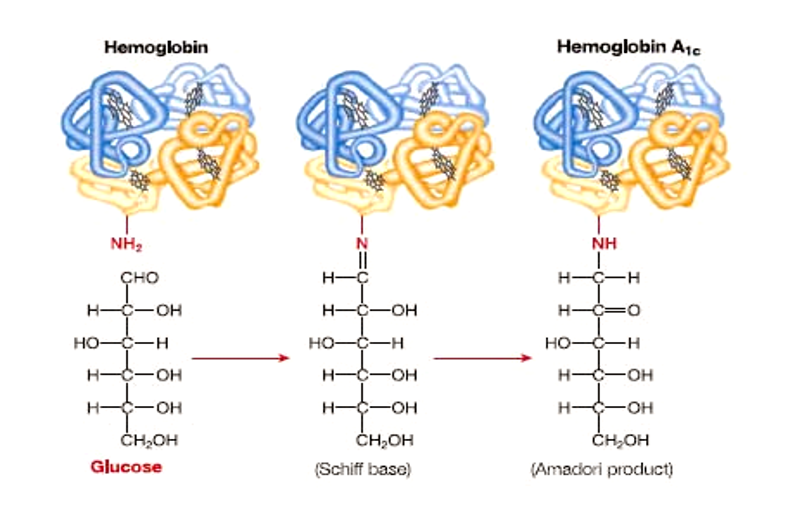
A 65-year-old man with a history of type 2 diabetes mellitus is complaining of blurred vision and numbness in his toes. Laboratory results are significant for an increased BUN and creatinine, indicative of renal failure, and high HbA1c, indicative of chronic persistent hyperglycemia. Of the several proposed mechanisms, one mechanism responsible for hyperglycemia-induced complications in
Question the week-2 (Answer) Read More »
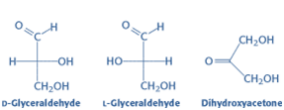
Q.1- Discuss in brief about the isomerism in monosaccharides.Answer- The sugar molecules having asymmetric carbon atoms exhibit isomerism. Asymmetric carbon atom- It is the carbon atom that is attached to four different groups. All monosaccharides except- Dihydroxyacetone, have asymmetric carbon atoms. Based on the presence of asymmetric carbon atoms the following types of isomerism of monosaccharides are
Important Questions of Monosaccharides (Solved)(Set-1) Read More »
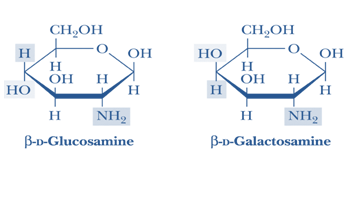
Introduction The most abundant heteropolysaccharides in the body. Highly negatively charged molecules, with extended conformation that imparts high viscosity to the solution. GAGs are located primarily on the surface of cells or in the extracellular matrix (ECM). Along with the high viscosity of GAGs comes low compressibility, which makes these molecules ideal for a lubricating
Glycosaminoglycans and proteoglycans – A quick revision Read More »
Monosaccharides from S.S.R.Medical College, Mauritius
Monosaccharides-Chemistry and functions Read More »
Polysaccharides from S.S.R.Medical College, Mauritius
Chemistry and Significance of Polysaccharides Read More »
Oligosaccharides from S.S.R.Medical College, Mauritius
Chemistry and significance of disaccharides and oligosaccharides Read More »