Chemistry of Lipids

Structure and functions of cholesterol

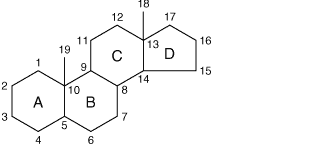
Structure and functions of cholesterol Cholesterol is the major sterol in the animal tissues. The structure of cholesterol consists of four fused rings (the rings in steroids are denoted by the letters A, B, C, and D), with the carbons numbered in the sequence, and an eight numbered, and branched hydrocarbon chain attached to the […]

Structure and functions of cholesterol Read More »
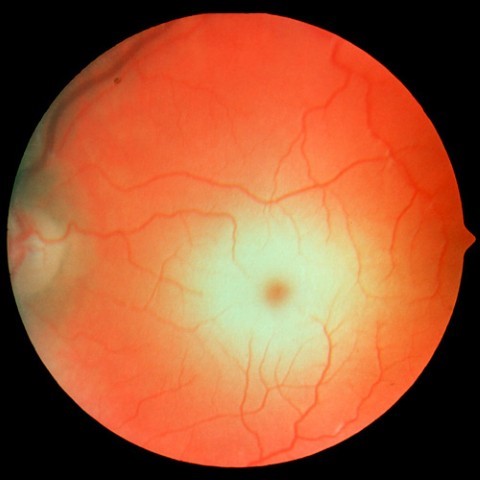
Tay-Sachs disease- a case based discussion

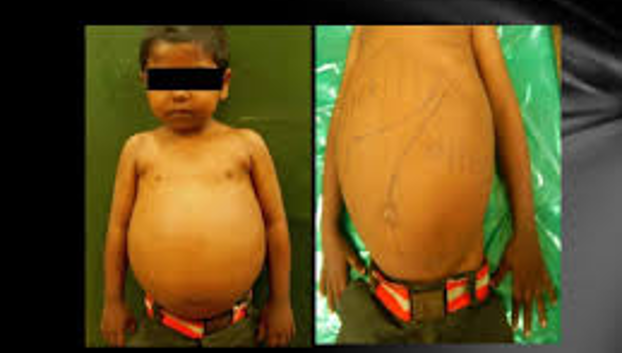
Case details A boy was born normal but started flinching at loud noises (enhanced startle response) at the age of 6 months. The child initially could sit up but then regressed so that he could not roll over or recognize his parents. Ophthalmological examination revealed a central red area of the retina surrounded by white

Tay-Sachs disease- a case based discussion Read More »

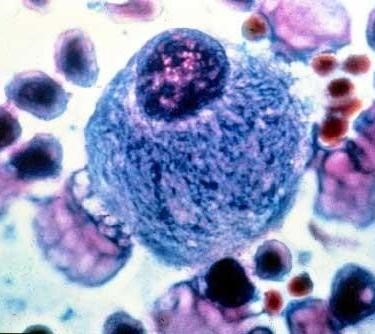
Case study- Gaucher disease

Case Details A 25 –year-old woman presents, with a history that includes- a) Hepatosplenomegaly with eventual removal of the spleen b) Bone and joint pains with several fractures of the femur. c) A liver biopsy that shows wrinkled-looking cells with an accumulation of Glucosyl ceramide, What would be the likely diagnosis for this patient? Case

Case study- Gaucher disease Read More »

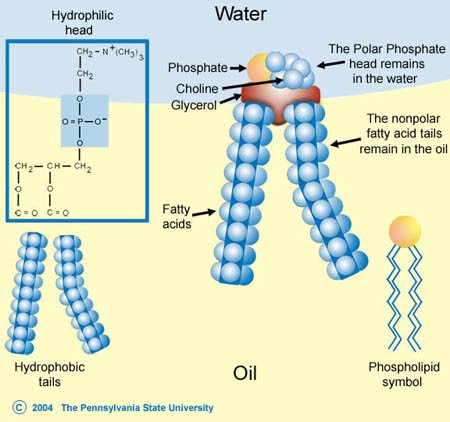
Characteristics of phospholipids

Q.1- Which one of the following characteristics of phospholipids is correct? A. They always contain choline and glycerol B. They are an important source of energy during fasting C. They are major components of membranes D. They are uncharged at physiological pH E. They are water-insoluble. Details The correct answer is -C. The phospholipids are

Characteristics of phospholipids Read More »

Lipid chemistry- Multiple-choice questions-set-4

Q.1- Endogenously synthesized triacylglycerols are transported from the liver to extrahepatic tissues by which of the following lipoproteins? a) Chylomicrons b) VLDL c) LDL d) HDL Q.2- All of the following have 18 carbon atoms except – a) Linoleic acid b) Palmitic acid c) Linolenic acid d) Stearic acid         Q.3- Sphingosine is not present in- a) Cerebrosides

Lipid chemistry- Multiple-choice questions-set-4 Read More »

Lipid Chemistry- Multiple-choice questions-set-3

Q.1- Which out of the  following alcohols  is used for waxes? a) Cholesterol                                                                    b) Glycerol c)  Cetyl Alcohol                                                                d) Sphingol                                         Q.2- Choose the Dienoic fatty acid out of the following- a) Oleic acid                                                                        b) Linoleic acid c) Linolenic acid                                                                 d) Stearic acid                                    Q.3- Which of the following lipids is abundantly present in the white

Lipid Chemistry- Multiple-choice questions-set-3 Read More »

Lipid chemistry- Multiple-choice questions-set-2

Q.1- Which of the following lipids is a charged lipid? a) Phospholipid b) Cholesterol b) Triacylglycerol d) Glucocerebroside Q.2- Choose the ω9 fatty acid out of the following- a) Oleic acid b) Linoleic acid c) Linolenic acid d) Stearic acid Q.3- Choose the incorrect statement about fatty acids out of the following- a) The melting

Lipid chemistry- Multiple-choice questions-set-2 Read More »

Lipid chemistry- Multiple-choice questions (set-1)

Q.1- Which of the following is a storage form of lipid? a) Phospholipid b) Glycolipid c) Triacylglycerol d) Sulfolipid Q.2- Choose the monounsaturated fatty acid out of the following- a) Oleic acid b) Linoleic acid c) Linolenic acid d) Stearic acid Q.3- Choose the correct statement about fatty acids out of the following- a) The

Lipid chemistry- Multiple-choice questions (set-1) Read More »

Cholesterol-chemistry and metabolism- Multiple-choice questions

1)- Cholesterol is a precursor of all of the following except- a) Taurocholate b) Glycocholate c) Calcitriol d) Corticosteroids e) Calcitonin. 2)- All 27 carbon atoms of cholesterol are derived from- a) Acetyl CoA b) Acetoacetyl CoA c) Propionyl CoA d) Succinyl CoA e) Malonyl CoA 3)- Cytosolic  3-hydroxy-3-methylglutaryl CoA (HMG CoA) is reduced to

Cholesterol-chemistry and metabolism- Multiple-choice questions Read More »

×